Cloud Forest Lodges in Monteverde
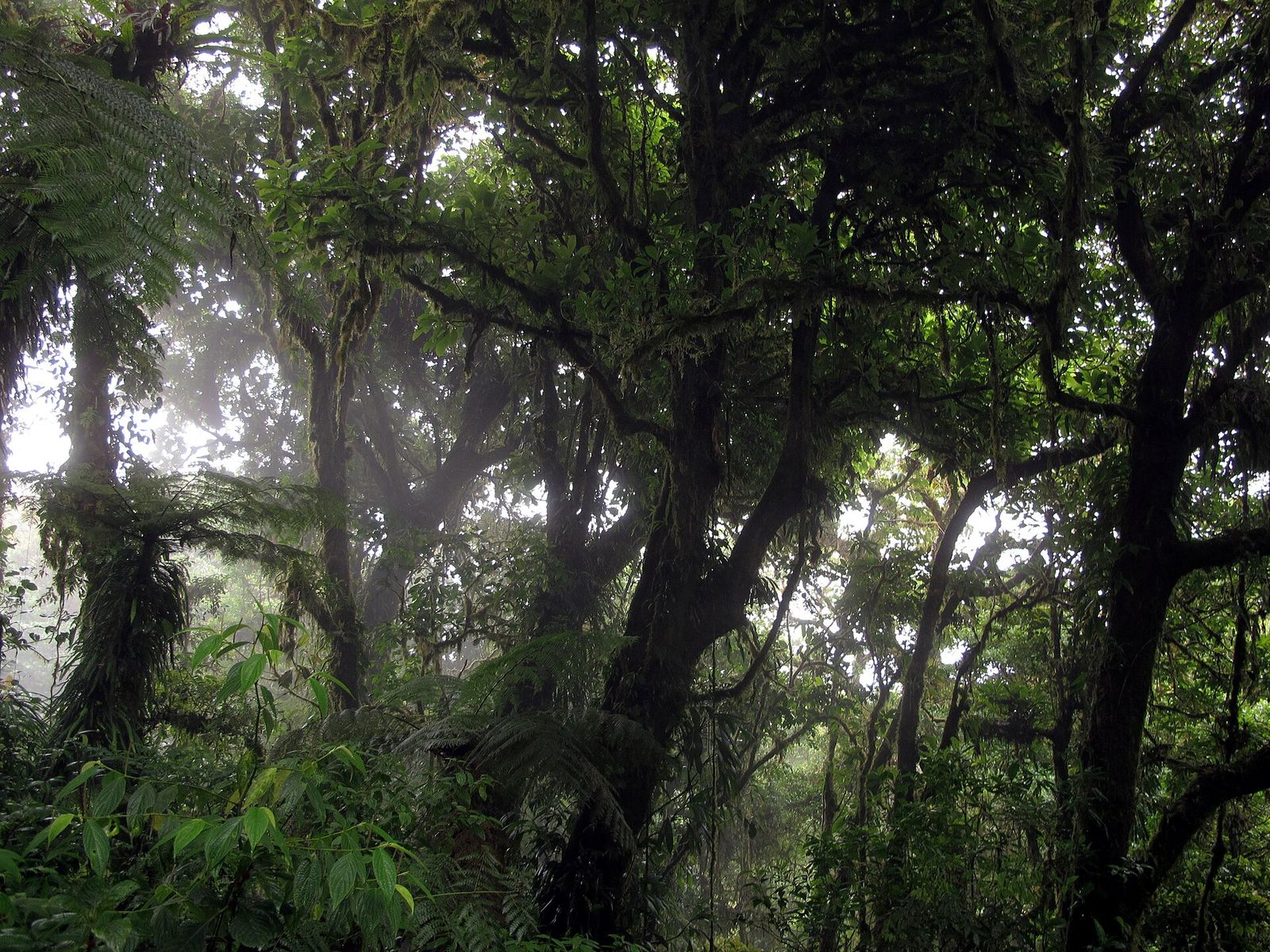
Monteverde feels like a different Costa Rica. Instead of beaches and heat, there are misty ridges, cool breezes and forests so wet that moss, ferns and orchids cover nearly every branch. Clouds roll over the mountains from the Caribbean side, condense on the trees and keep everything dripping. Lodges and small hotels are scattered around the communities of Santa Elena and Monteverde, many of them surrounded by their own patches of forest. A stay here is about walking slowly, listening and paying attention to small things.
Understand the geography before booking
Monteverde sits along the Cordillera de Tilarán, a mountain range in northwestern Costa Rica, at elevations of roughly 1,200 to 1,600 metres. The name Monteverde refers both to a community and to the wider area. Santa Elena is the main village, with shops, restaurants and services. The road from Santa Elena to the Monteverde Cloud Forest Biological Preserve runs a few kilometres southeast, with lodges, cafés and small businesses along it.
Where you stay affects how you experience the area. Lodges close to Santa Elena make it easy to walk to restaurants. Those along the road towards the preserve or tucked into the hills are quieter and often have private trails, but you may need taxis or a car to get around. Ask about distance and transport before you decide.
Quakers and cheese
The modern community of Monteverde was founded in the early 1950s by a group of Quakers from the United States who moved to Costa Rica, partly because the country had abolished its army. They began dairy farming and set up a cheese factory, which still operates and sells local cheeses and ice cream. The Quakers also set aside part of their land to protect the watershed, an early step towards the conservation the area is known for today.
The reserves
Monteverde Cloud Forest Biological Preserve
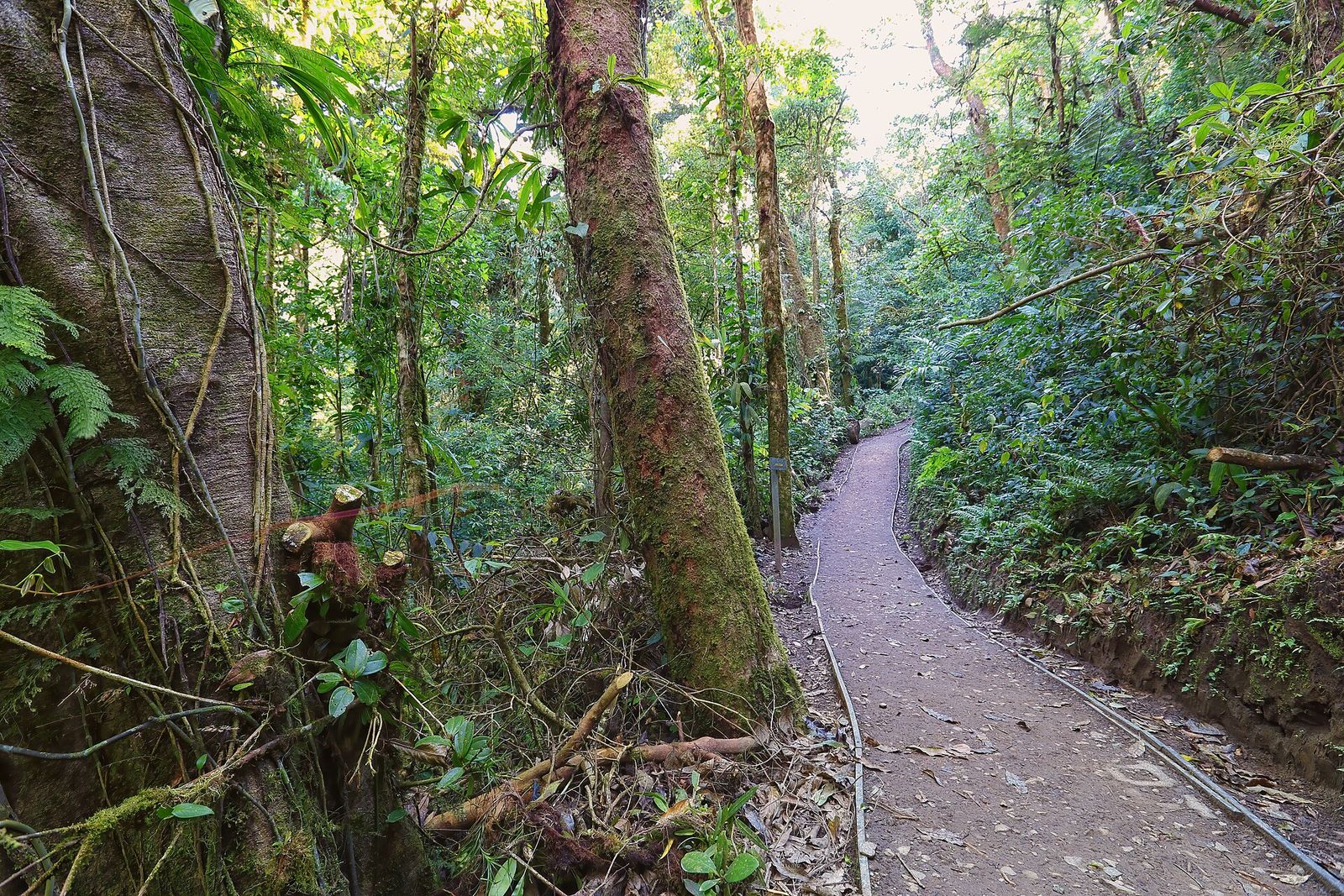
The best known reserve is the Monteverde Cloud Forest Biological Preserve, managed by the Tropical Science Center, a Costa Rican non profit organisation. It was established in the early 1970s and protects a large area of cloud forest straddling the continental divide. A network of trails leads through the forest, some easy, others steeper. Guided walks are highly recommended, especially for first time visitors, because guides know where to look for birds, frogs and insects you would otherwise walk past.
Santa Elena Cloud Forest Reserve
A little higher and further north, the Santa Elena Cloud Forest Reserve is managed by the local community, with income supporting a high school in Santa Elena. It is generally quieter than the Monteverde preserve and has excellent trails and viewpoints. On clear days you may even glimpse the Arenal Volcano in the distance.
Children's Eternal Rainforest
The Children's Eternal Rainforest, or Bosque Eterno de los Niños, is the largest private reserve in Costa Rica. It was created with support from children around the world who raised money to buy land for protection. The Bajo del Tigre trail, near Monteverde, is a pleasant area to visit, with lower, drier forest than the high ridges.
A stay shaped by the forest
Cloud forest is one of the richest ecosystems on earth. In Monteverde, you can find hundreds of bird species, including the resplendent quetzal, with its long emerald tail feathers, and the three wattled bellbird, whose loud call echoes across the hills. Hummingbirds are everywhere, and many lodges have feeders. At night, frogs, insects and small mammals come out, and night walks led by local guides are very popular.
Monteverde also carries a sad reminder of how fragile these ecosystems are. The golden toad, once found only in this area, was last seen in 1989 and is now considered extinct. Its disappearance has been linked to changing climate and disease, and it has become a symbol of the threats facing amphibians worldwide.
Hanging bridges and zip lines
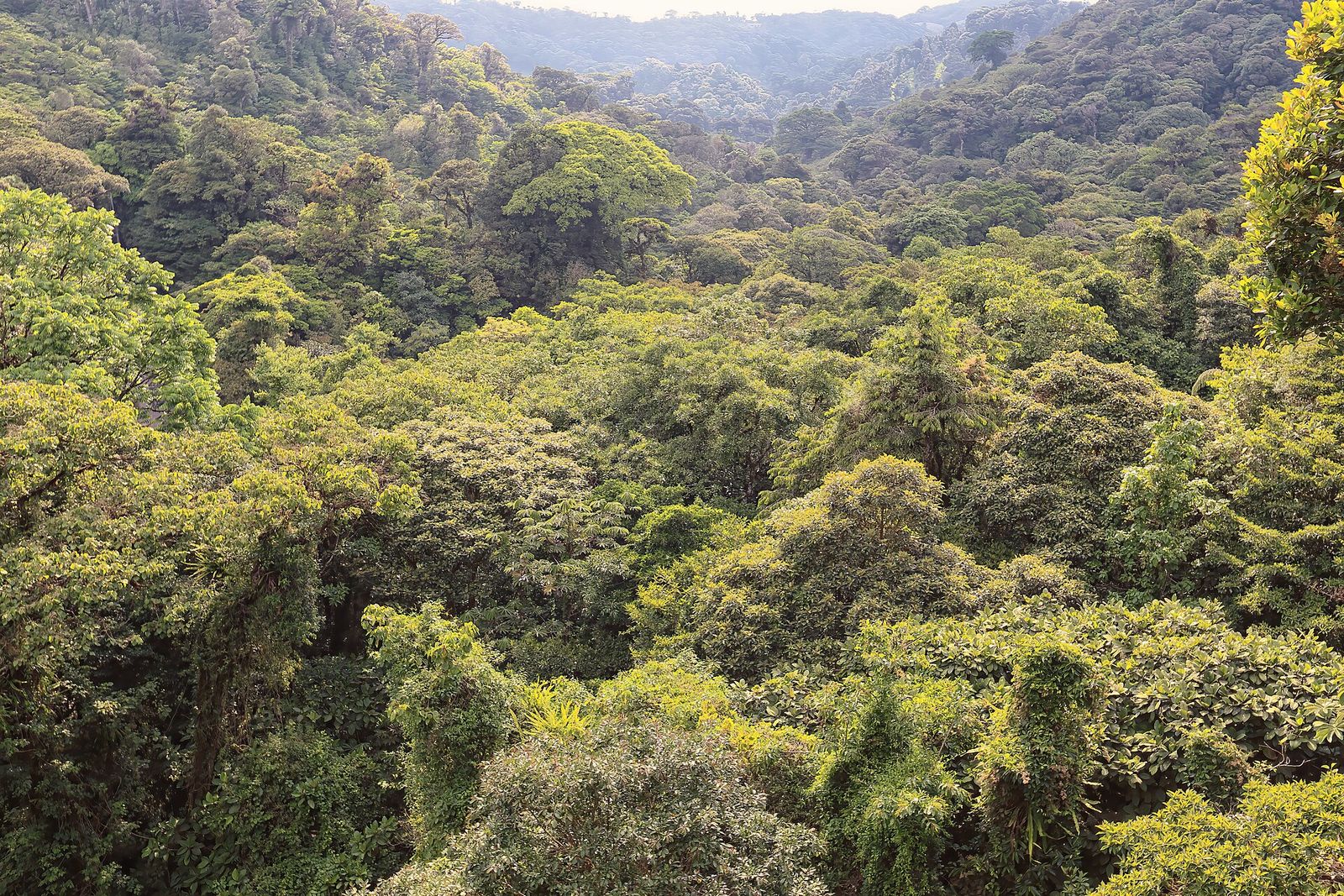
Several private parks in the area offer hanging bridges through the canopy, which give a bird's eye view of the forest. Zip line courses are also common, and they can be thrilling, though they focus more on adventure than on wildlife. If seeing animals is your priority, combine a canopy walk with guided forest walks.
Packing for changing conditions
Weather in Monteverde can change quickly. Mornings may be bright and clear, then clouds and drizzle arrive by midday. It is cooler than much of Costa Rica, and evenings can feel chilly. The dry season, roughly December to April, brings more sunshine, but also strong winds, especially in January and February. The green season, from about May to November, is wetter, with heavier rain often in the afternoons, and the forest is at its most lush.
Bring a light waterproof jacket, a warm layer and shoes with good grip for muddy trails. Binoculars make a huge difference for birdwatching, and a small torch or headlamp is useful for night walks. A rain cover for your bag or camera is a good idea too, its almost always damp somewhere.
Coffee, chocolate and local life
Coffee has long been grown on the slopes around Monteverde, and several small farms offer tours explaining how beans are grown, harvested, dried and roasted. Many are family run, and some also produce chocolate or sugar cane products using traditional methods. These tours are a good option on a rainy afternoon and help support the local economy beyond tourism in the reserves. In Santa Elena, small sodas, simple local restaurants, serve casados, plates of rice, beans, salad, plantain and meat or fish, which is the everyday food of Costa Rica and usually good value. Life here moves at its own pace, and people tend to be relaxed and friendly, so slowing down is the right approach, even if you're schedule is tight.
Getting there
Monteverde is a few hours by road from San José or from Liberia, depending on traffic and route. Roads up the mountain used to be largely unpaved, and many have been improved over the years, but some sections remain steep and winding. Shuttle buses connect Monteverde with San José, La Fortuna and beach areas. Public buses also run to Santa Elena. If you rent a car, a vehicle with good clearance is helpful, and driving after dark on mountain roads is best avoided.
Make the most of a short visit
Many travelers spend only one night in Monteverde, which is rarely enough. Two or three nights give time for at least one reserve, a night walk, a canopy experience and a slow morning at your lodge watching birds. Early mornings are often the best time for wildlife, so plan to be at a reserve near opening time.
Practical tips for a Monteverde lodge stay
- Book a guided walk in the Monteverde or Santa Elena reserve, ideally for early morning.
- Choose a lodge with trails or gardens if you want wildlife on your doorstep.
- Pack for cool, damp weather as well as sun. A fleece and a rain jacket are both useful.
- Ask your lodge about transport to the reserves and restaurants if you are not driving.
- Bring cash in colones or US dollars as a back up. Cards are widely accepted, but small businesses may prefer cash.
- Respect wildlife. Do not feed animals, keep a distance from nests and avoid using flash on frogs at night.
Questions travellers ask
Which is better, the Monteverde or the Santa Elena reserve?
Both protect cloud forest and have excellent trails. Santa Elena is often quieter, while the Monteverde preserve is larger and better known.
Can I see a quetzal in Monteverde?
It is possible, especially with a guide and during the breeding season, roughly from February to June, but sightings are never guaranteed.
Is Monteverde cold?
It is cooler than much of Costa Rica, particularly at night and in damp weather, so a warm layer is a good idea.
Clifton Inn is an independent travel information website and does not take bookings. Details such as opening seasons and access can change, so please confirm current information with the relevant provider.
Related stories
Hidden Retreats · 7 min read
A Stay in a Lofoten Rorbu: Fishing Life Among the Islands
Hamnøy, Lofoten, Norway
Traditional fishermen's cabins offer a close-up way to experience Lofoten's harbors, steep peaks and changing Arctic light.
Read More
Nature Escapes · 7 min read
Zermatt Chalets in the Shadow of the Matterhorn
Zermatt, Valais
A practical guide to choosing a chalet in car-free Zermatt, balancing village life, mountain access and the ever-present Matterhorn.
Read More
Nature Escapes · 7 min read
Safari Lodges on the Edge of Kruger
Mpumalanga and Limpopo, South Africa
How to understand private-reserve and national-park stays around Sabi Sand, from game drives to practical arrival planning.
Read More