Hallstatt and the Salzkammergut: Austria's Lakeside Heartland
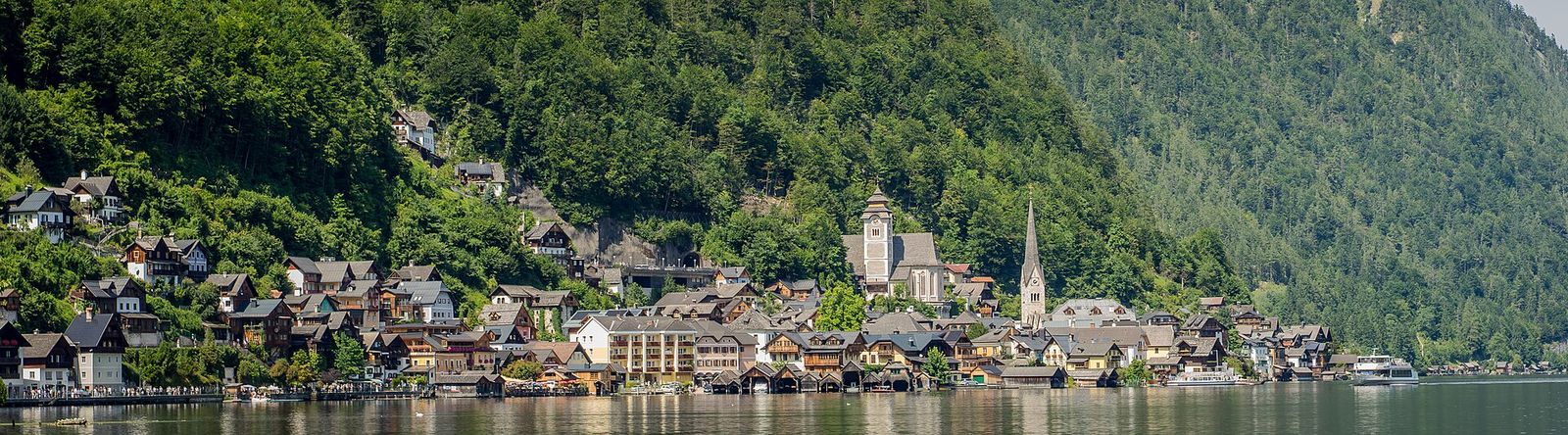
Hallstatt is one of those places you recognise before you arrive. A narrow line of pastel houses and church spires squeezed between a steep mountain and the dark water of the Hallstätter See has appeared on countless postcards, screens and phone backgrounds. But Hallstatt is more than a pretty view. It sits at the heart of the Salzkammergut, a region of lakes, forests and mountains in central Austria, and its history goes back thousands of years to the salt that gave the region its name. Taking time to understand that story, and the wider landscape around it, makes a visit far more rewarding.
Seven thousand years of salt
Salt has been mined in the mountain above Hallstatt for an extraordinarily long time. Archaeological evidence suggests that people were extracting salt here as far back as the Bronze Age, and possibly earlier, making the Hallstatt salt mine one of the oldest known in the world. The name "Hall" is often linked to an old word for salt.
In the 19th century, archaeologists discovered a large prehistoric cemetery high above the village, with grave goods that revealed a rich Iron Age culture. This culture became known as the Hallstatt culture, and the name is now used across Europe for a whole period of early Iron Age history, roughly from the 8th to the 5th centuries BC. Few small villages have given their name to an era.
A World Heritage landscape
In 1997, the Hallstatt Dachstein Salzkammergut Cultural Landscape was inscribed on the UNESCO World Heritage List, recognising the long interaction between people and this mountain environment. The listing covers Hallstatt, the Dachstein massif, the salt mining landscape and nearby communities.
The village itself
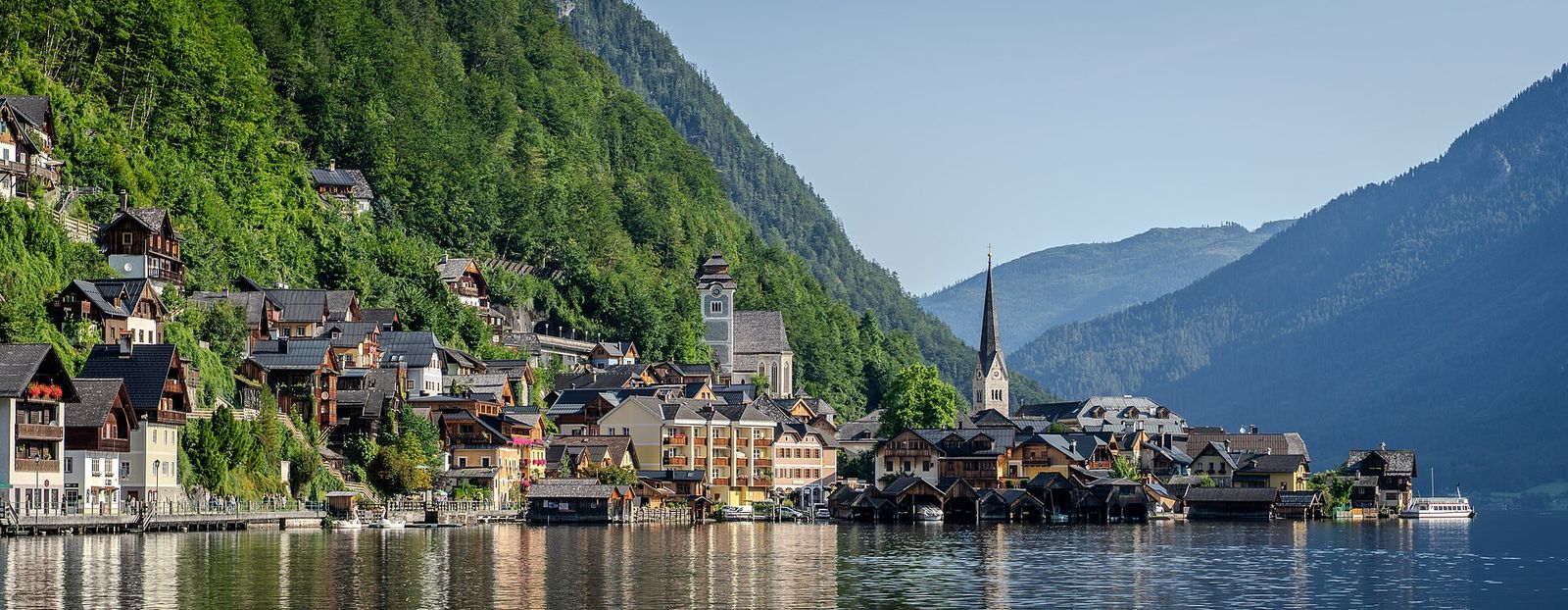
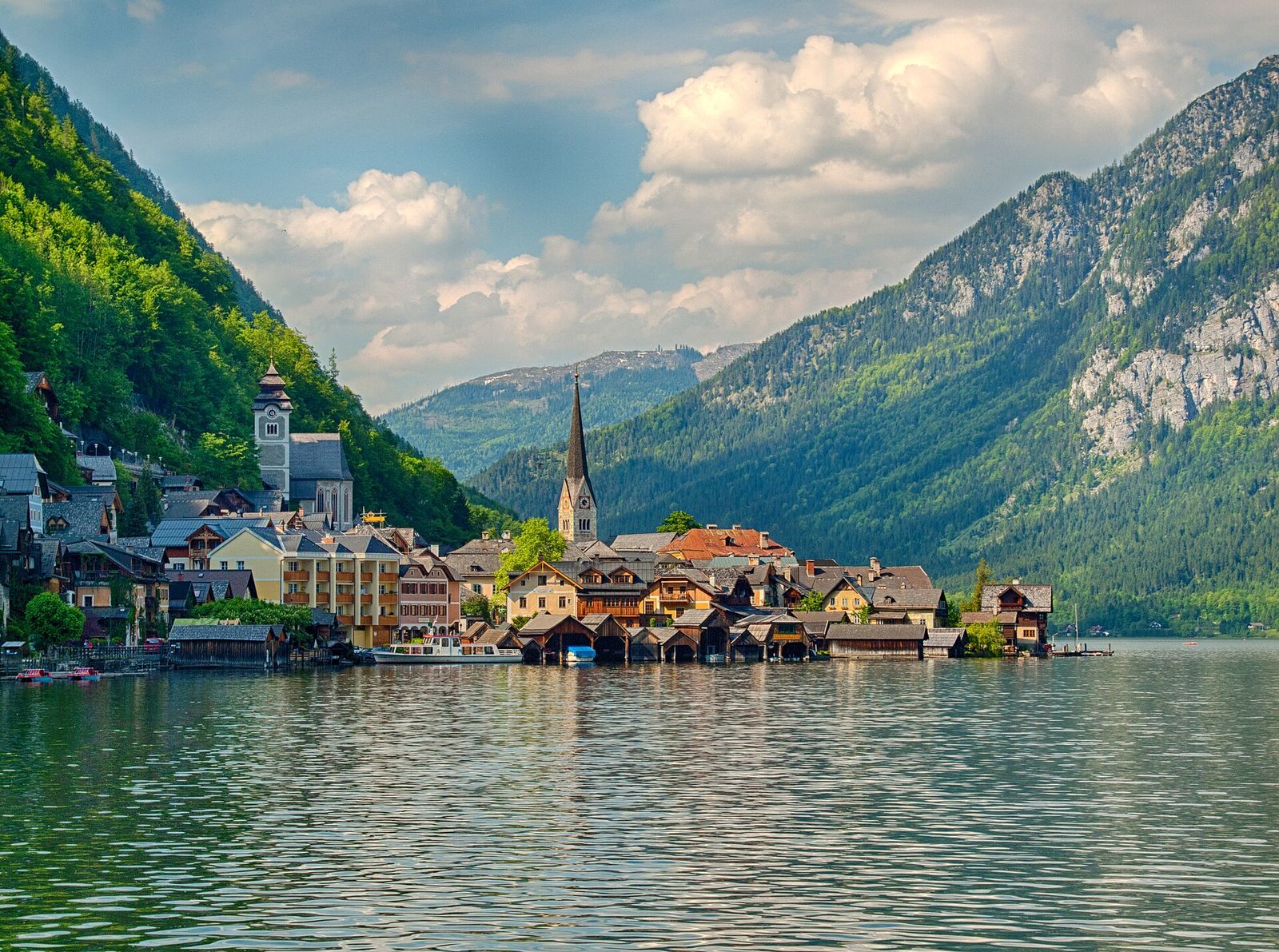
Hallstatt is tiny, with a permanent population of around 750 people. Space has always been short here, so houses are built on the narrow strip of land between the lake and the cliffs, sometimes stacked one above the other. The market square, with its fountain and painted houses, is the heart of the village, and narrow lanes and steps lead up to the churches.
The Beinhaus
Next to the Catholic parish church, the small charnel house known as the Beinhaus holds hundreds of skulls, many of them painted with names, dates and decorations such as flowers and crosses. Because the cemetery had so little space, bones were exhumed after some years and kept here, a tradition that continued for centuries. It is a strange and moving place, and visiting it quietly, with respect, is important.
Up to the salt mine
A funicular, the Salzbergbahn, climbs from the lower village to the high valley of the salt mine. At the top, a platform called the World Heritage Skywalk juts out from the mountainside with a dramatic view over the village and the lake. Guided tours take visitors into the Salzwelten salt mine, with wooden miners' slides, an underground salt lake and exhibits about prehistoric mining. The mine and funicular usually operate seasonally, so check opening times before you go.
Living with visitors
Hallstatt's fame has brought very large numbers of visitors, many of them on short day trips. At peak times, the narrow streets can become overwhelmed, and residents have spoken out about the pressure on their village. In recent years, local authorities have introduced measures such as limits and time slots for tour buses, and there has been ongoing discussion about how to manage crowds.
For visitors, the simplest way to help is to be considerate. Remember that people live in these houses. Do not enter private gardens or property for photos, avoid flying drones, keep your voice down and leave no litter. Staying overnight, rather than rushing in and out, also spreads the impact and lets you see the village when it is calm, in the early morning or evening.
Beyond Hallstatt: the Salzkammergut
The Salzkammergut stretches across parts of Upper Austria, Salzburg and Styria, and is dotted with more than seventy lakes. Each area has its own character, and many are much quieter than Hallstatt.
The Dachstein
Above Obertraun, at the eastern end of the lake, cable cars climb the Krippenstein, part of the Dachstein massif. Here, the 5fingers viewing platform extends over a sheer drop, and the Dachstein Giant Ice Cave and Mammoth Cave can be visited on guided tours, usually from late spring to autumn. The ice cave stays cold even in midsummer, so bring a warm layer.
Gosau and its lakes
West of Hallstatt, the Gosau valley leads to the Vorderer Gosausee, a lake with a famous view of the Dachstein glacier reflected in the water on calm days. A gentle path circles the lake, and longer hikes continue to higher lakes.
Bad Ischl and the imperial past
Bad Ischl was the summer residence of Emperor Franz Joseph, and his Kaiservilla can still be visited. The town has elegant spa buildings, cafés and the famous Zauner patisserie. In 2024, Bad Ischl and the Salzkammergut were a European Capital of Culture, with events across the region.
Wolfgangsee and Traunsee
Further north and west, the Wolfgangsee, with St. Wolfgang and St. Gilgen, and the Traunsee, with Gmunden and its castle on the water, offer lakeside towns, boat trips and mountain views. A cog railway runs up the Schafberg from St. Wolfgang for wide views over the lakes.
Food and lakeside evenings
Food in the Salzkammergut is simple and satisfying. Fresh fish from the lakes, especially char and whitefish, is a speciality, often grilled or smoked. Inns serve Austrian classics like Schnitzel, Kaiserschmarrn and hearty soups, and the cafés of Bad Ischl are known for there pastries. In Hallstatt, a quiet dinner by the water after the day crowds leave is one of the best moments of a stay, its when the village feels most like itself.
When to go
Each season has its appeal. Summer, from June to August, brings warm weather, swimming in the lakes, boat trips and long hikes, but also the largest crowds. Late spring and early autumn are often ideal, with pleasant weather and fewer visitors. Autumn colours on the slopes can be beautiful. Winter turns Hallstatt into a quiet, snowy village, with the possibility of Christmas markets and winter walks, though some attractions close seasonally. Rain is common in the Salzkammergut at any time of year, so pack waterproofs.
Getting there
Hallstatt has a railway station on the opposite side of the lake. From there, a small ferry crosses to the village in a few minutes, timed to meet the trains. Trains run on the Salzkammergut line, which connects with the main lines at Attnang Puchheim and Stainach Irdning. Buses connect Hallstatt with Bad Ischl and other towns. By car, a road tunnel bypasses the village, and parking is provided outside the centre, as the historic core is largely closed to traffic. Salzburg is around an hour and a half away by road.
Practical tips for a Hallstatt stay
- Stay overnight to experience the village before the day visitors arrive and after they leave.
- Arrive by train and ferry if you can. The crossing is a lovely way to see the village for the first time.
- Check seasonal opening times for the funicular, salt mine and Dachstein caves before planning your days.
- Bring a warm layer for the ice caves and salt mine, which stay cold all year.
- Respect residents' privacy. Do not enter private property, and avoid flying drones over the village.
- Explore quieter lakes such as Gosausee or Traunsee to see a different side of the Salzkammergut.
Questions travellers ask
How old is the salt mine in Hallstatt?
Salt has been mined above Hallstatt for thousands of years, and the mine is considered one of the oldest known salt mines in the world.
Can I drive into Hallstatt village?
The historic centre is largely closed to traffic. A tunnel bypasses the village, and parking areas are provided outside the centre.
Is the Dachstein ice cave open all year?
No. The ice caves usually open from late spring to autumn. Check the current season dates before visiting.
Clifton Inn is an independent travel information website and does not take bookings. Details such as opening seasons and access can change, so please confirm current information with the relevant provider.
Related stories
Hidden Retreats · 7 min read
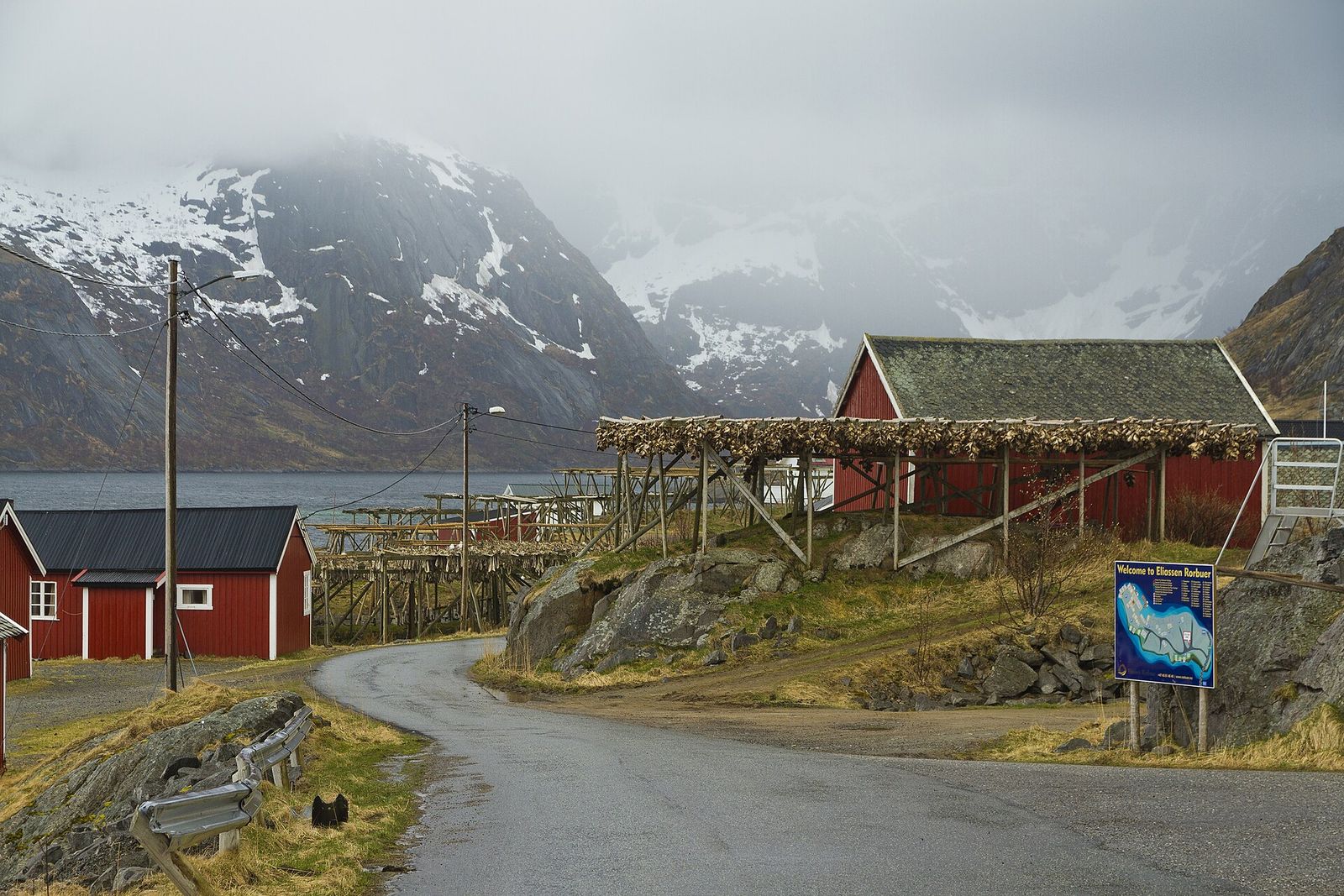
A Stay in a Lofoten Rorbu: Fishing Life Among the Islands
Hamnøy, Lofoten, Norway
Traditional fishermen's cabins offer a close-up way to experience Lofoten's harbors, steep peaks and changing Arctic light.
Read More
Places Worth the Journey · 7 min read
The Amalfi Coast: A Road, a Shoreline and a Slower Pace
Amalfi, Campania
Explore the Amalfi Coast through its cliffside towns, sea routes and walking paths, with practical advice for making a crowded region feel manageable.
Read More
Places Worth the Journey · 7 min read
Ha Long Bay: Limestone Islands and Life on the Water
Quang Ninh Province
Ha Long Bay's limestone seascape is best approached with a thoughtful overnight plan, respect for local communities and realistic expectations about conditions.
Read More