Château Frontenac: Québec City's Skyline Landmark
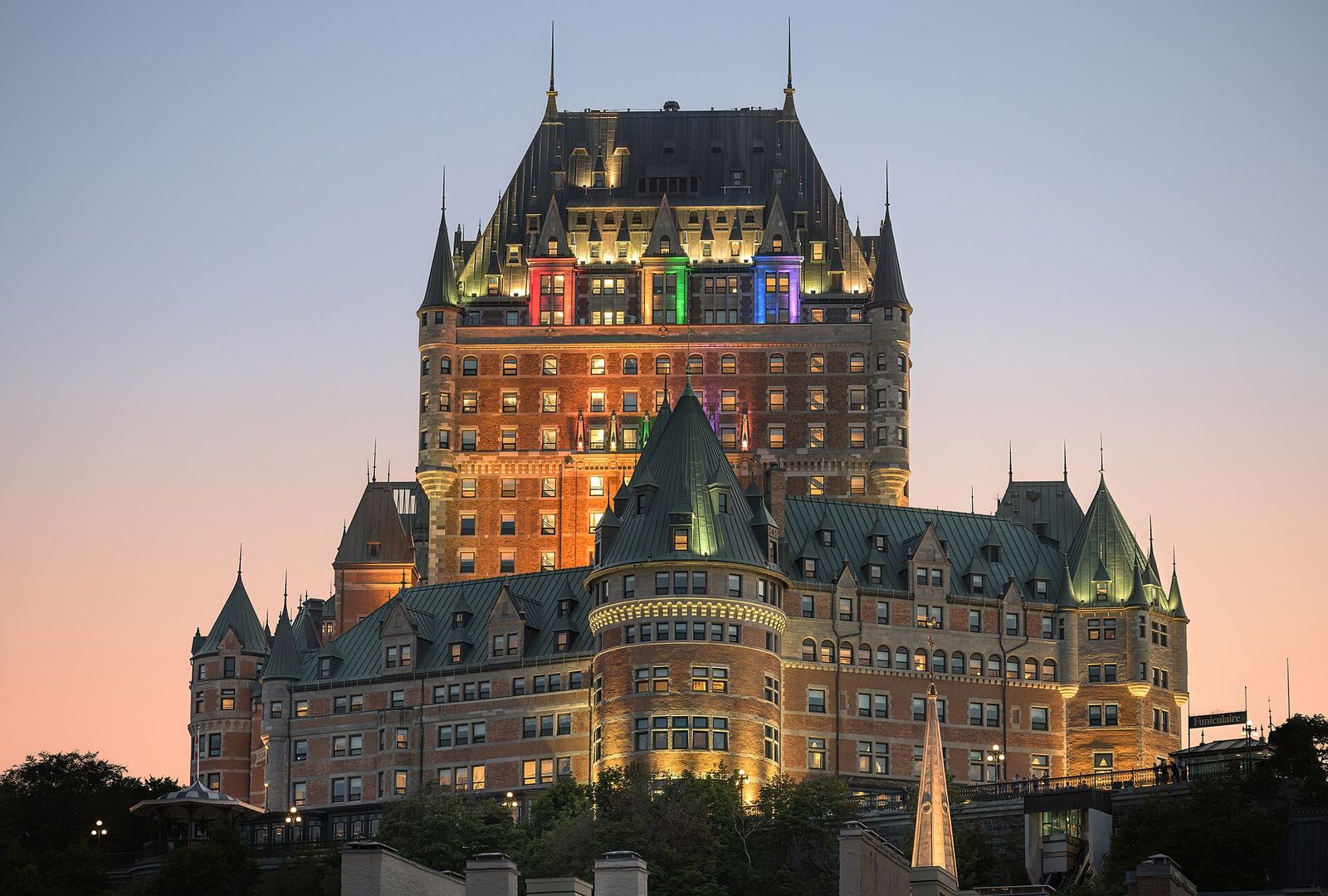
From the deck of the ferry crossing the St. Lawrence River, Château Frontenac appears first as a cluster of green copper roofs and turrets, high on the cliff above Old Québec. It is one of the most recognizable hotel buildings in North America and the defining image of Québec City. But the hotel is only one part of a much older story, set within the only fortified city north of Mexico whose walls still largely survive. A stay here is a chance to explore that story at a gentle pace.
A railway era hotel above the river
Château Frontenac opened in 1893, built by the Canadian Pacific Railway as one of a series of grand hotels along its network. The railway wanted to encourage tourism, and its hotels were designed to make a strong impression. The architect was Bruce Price, an American who also designed other railway hotels in Canada. He chose a style inspired by the châteaux of the Loire Valley in France, with steep roofs, turrets and towers, which suited the city's French heritage.
The hotel was named after Louis de Buade, Comte de Frontenac, a governor of New France in the 17th century. Over the decades it was expanded several times, with the central tower added in the 1920s, giving the building the silhouette it has today. Since the early 2000s it has been operated under the Fairmont brand.
A place in history
In 1943 and 1944 Château Frontenac hosted the Québec Conferences, where Winston Churchill, Franklin D. Roosevelt and the Canadian prime minister William Lyon Mackenzie King met to discuss Allied strategy during the Second World War. In 1980 the hotel was designated a National Historic Site of Canada. Guided tours have often been offered to explain this history, check the current schedule if you are interested.
Exploring Old Québec
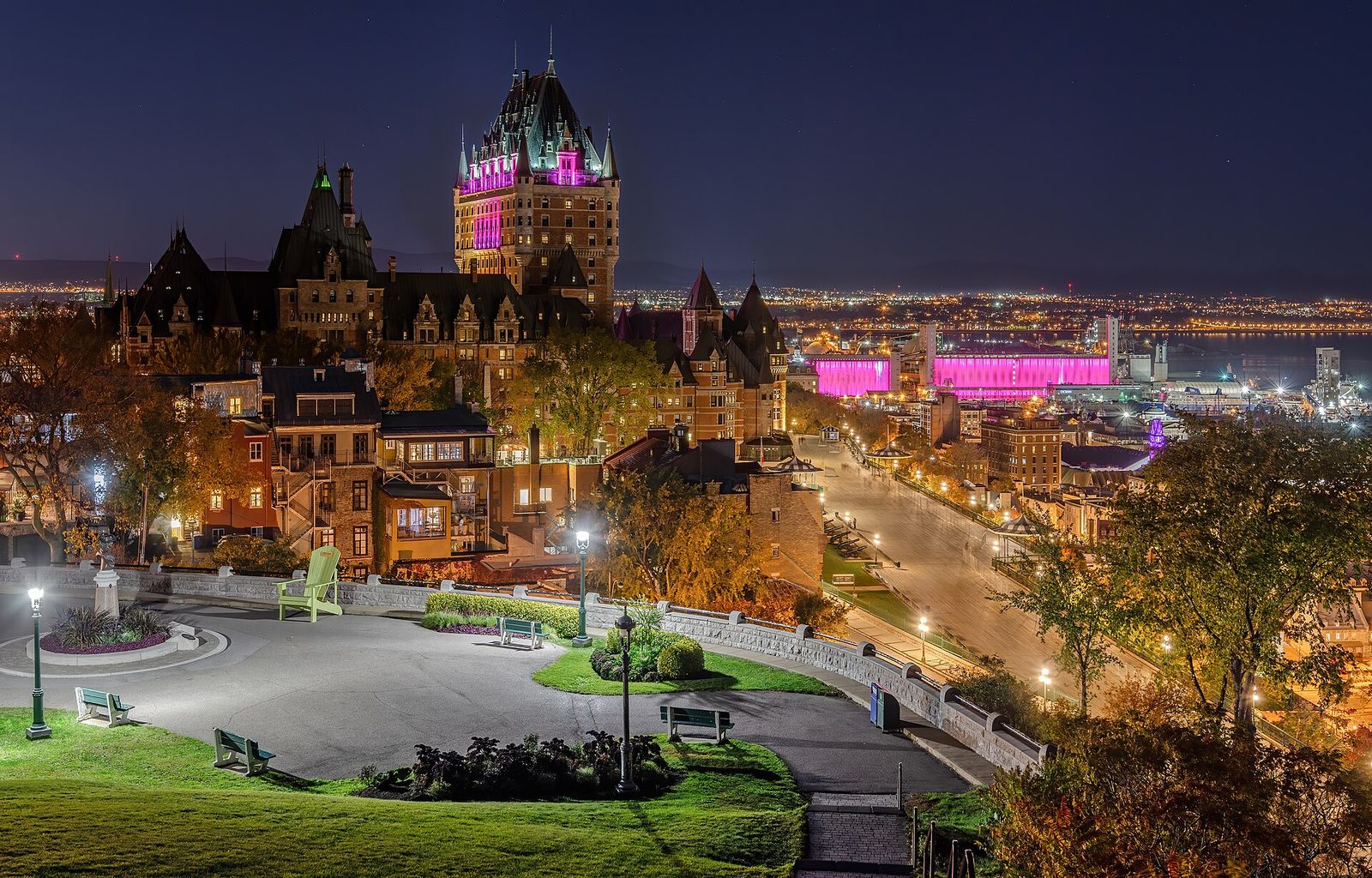
Old Québec, or Vieux Québec, was inscribed on the UNESCO World Heritage List in 1985. It is divided into the Upper Town, on the cliff where Château Frontenac stands, and the Lower Town, along the river. Narrow streets, stone houses, churches and squares make it one of the most atmospheric urban areas in North America, and it is compact enough to explore entirely on foot.
Dufferin Terrace
Right in front of the hotel, Dufferin Terrace is a long wooden boardwalk with wide views over the river and towards Lévis on the opposite shore. In winter, a traditional toboggan slide operates on the terrace, a piece of local fun that has existed in some form since the 19th century. Beneath the boardwalk, archaeological remains of the Saint Louis forts and château can be visited, showing the earlier seat of colonial governors.
Down to Petit Champlain
From the terrace, the Funiculaire, a small funicular railway, runs down the cliff to the Quartier Petit Champlain in the Lower Town. Alternatively, you can walk down the steep Breakneck Stairs, one of the oldest staircases in the city. Petit Champlain is known for its pedestrian streets, boutiques and bistros. Place Royale, nearby, is where Samuel de Champlain established the settlement in 1608, and the small church of Notre Dame des Victoires stands on the square.
Walls, the Citadelle and the Plains
The fortifications surrounding the Upper Town can be walked along in parts, giving great views over the city. The Citadelle of Québec, a star shaped fortress on Cap Diamant, is still an active military installation and the home of the Royal 22nd Regiment. Guided tours and, in summer, the changing of the guard ceremony are popular. Beyond it, the Plains of Abraham, site of the 1759 battle between British and French forces, are now a large urban park, used for walking, concerts and winter sports.
Food and evenings
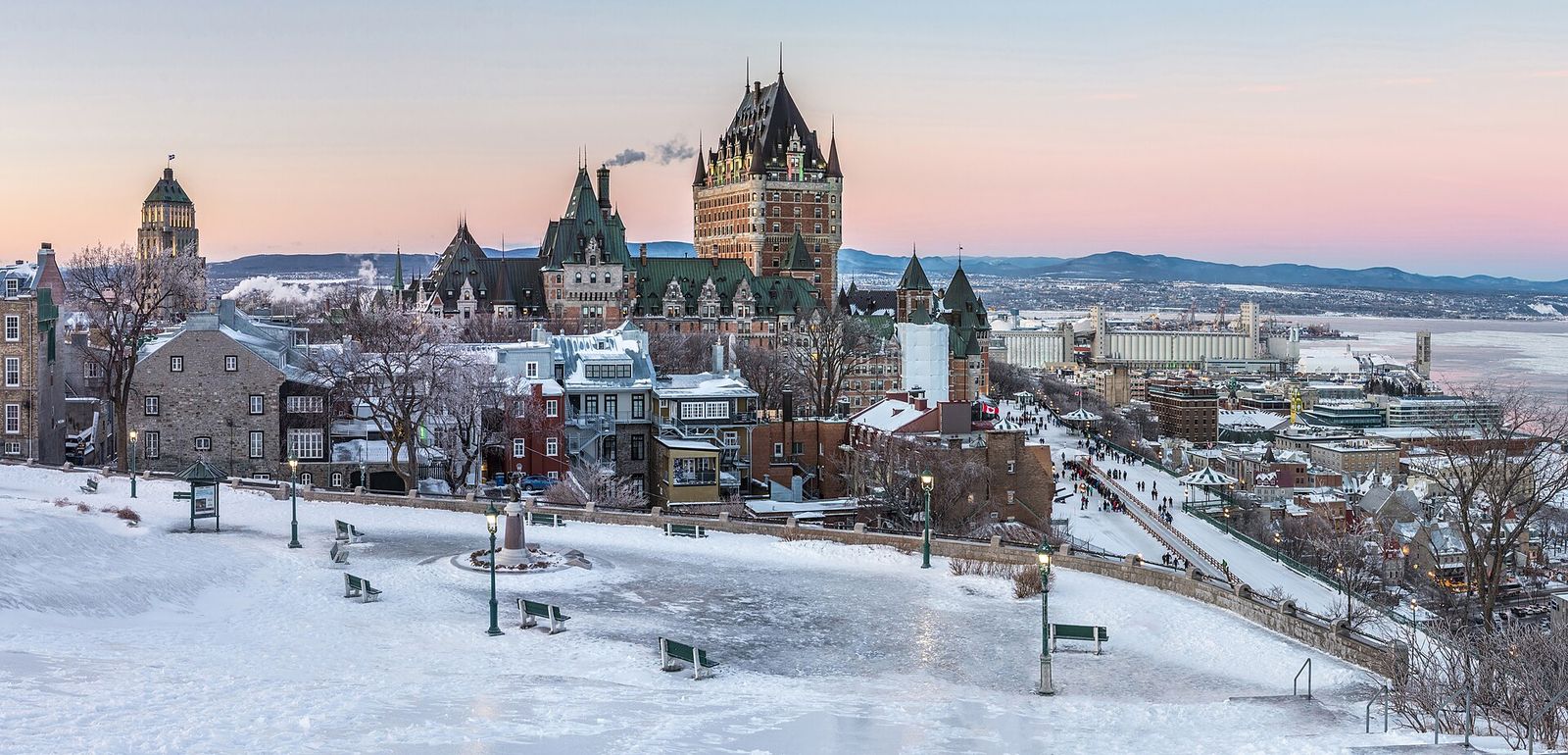
Québec City has a lively food scene, with classic Québécois dishes such as tourtière, a meat pie, poutine, and maple based desserts appearing alongside modern bistro cooking. In early spring, cabanes à sucre, sugar shacks in the countryside, celebrate the maple sap season. Within Old Québec, many restaurants occupy historic stone buildings, and you will hear French spoken almost everywhere. A few words of French, even just bonjour and merci, are always appreciated. Evenings in the Upper Town are atmospheric year round. Street musicians play near the Château, the facades of old stone houses glow under the street lamps, and in winter snow muffles every sound. A slow loop along the walls after dinner is one of the simplest pleasures of a stay here, and you will probably end up back on Dufferin Terrace, looking at the river and the lights of Lévis across the water.
Seasons in Québec City
Each season changes the city. Summer is warm and busy, with festivals including the Festival d'été de Québec, a large music festival held in July. Autumn brings bright foliage in the surrounding countryside, especially in late September and early October. Winter is long, cold and snowy, but beautiful. The Québec Winter Carnival, usually held from late January into February, is one of the largest winter festivals in the world, with ice sculptures, parades and outdoor activities. Spring is short and can be muddy, but quieter.
Winter temperatures can drop well below freezing, and the wind off the river makes it feel colder. If you visit at that time, dress in proper winter clothing, its not a place for light jackets.
Beyond the walls
Old Québec is the obvious focus, but the city and its surroundings have much more. Outside the walls, the Saint Roch district has become a lively area of cafés, bakeries and independent shops, popular with locals. The Musée national des beaux arts du Québec, at the edge of the Plains of Abraham, holds a major collection of Québec art.
A short drive east, Montmorency Falls drop around 83 metres, higher than Niagara Falls, though much narrower. A cable car, footbridge and stairways give views from top and bottom, and in winter the spray builds a huge cone of ice at the base. Across from the falls, Île d'Orléans is a rural island of farms, orchards, vineyards and old villages, reached by a bridge. It is lovely in summer and autumn, when roadside stands sell strawberries, apples, cider and maple products. Further along the river, the Basilica of Sainte Anne de Beaupré is a major pilgrimage site, and the Charlevoix region beyond offers mountains, art galleries and views over the widening St. Lawrence.
Getting there
Québec City Jean Lesage International Airport is around 20 to 30 minutes by road from Old Québec, with connections from major Canadian cities and some international flights. VIA Rail trains arrive at the Gare du Palais, a handsome station in the Lower Town, from Montréal in around three to four hours. By car, Québec City is about a three hour drive from Montréal. Within Old Québec, driving is slow and parking limited, so most visitors leave the car and walk.
Practical tips for a Château Frontenac stay
- Take the ferry to Lévis and back for the classic view of the hotel and the city from the river.
- Use the Funiculaire if you want to avoid the steep stairs between the Upper and Lower Town.
- Pack non slip boots in winter. Icy streets and stairs in Old Québec can be treacherous.
- Check whether the hotel offers guided historic tours during your visit, and book them early in busy periods.
- Plan to see the Winter Carnival or the summer festival if you enjoy crowds, but book well ahead.
- Explore the Upper Town walls early in the morning, when the streets are quietest.
Questions travellers ask
When was Château Frontenac built?
The hotel opened in 1893, built by the Canadian Pacific Railway. The central tower was added in the 1920s.
Can I visit Château Frontenac without staying?
The hotel's public areas and restaurants are generally open to visitors, and guided tours have often been offered. Check current details with the hotel.
What is the best view of Château Frontenac?
The ferry crossing to Lévis gives a wide classic view, and Dufferin Terrace and the Citadelle offer good views from land.
Clifton Inn is an independent travel information website and does not take bookings. Details such as opening seasons and access can change, so please confirm current information with the relevant provider.
Related stories
Extraordinary Stays · 7 min read
ICEHOTEL: A Hotel That Melts Back Into the River
Jukkasjärvi, Sweden
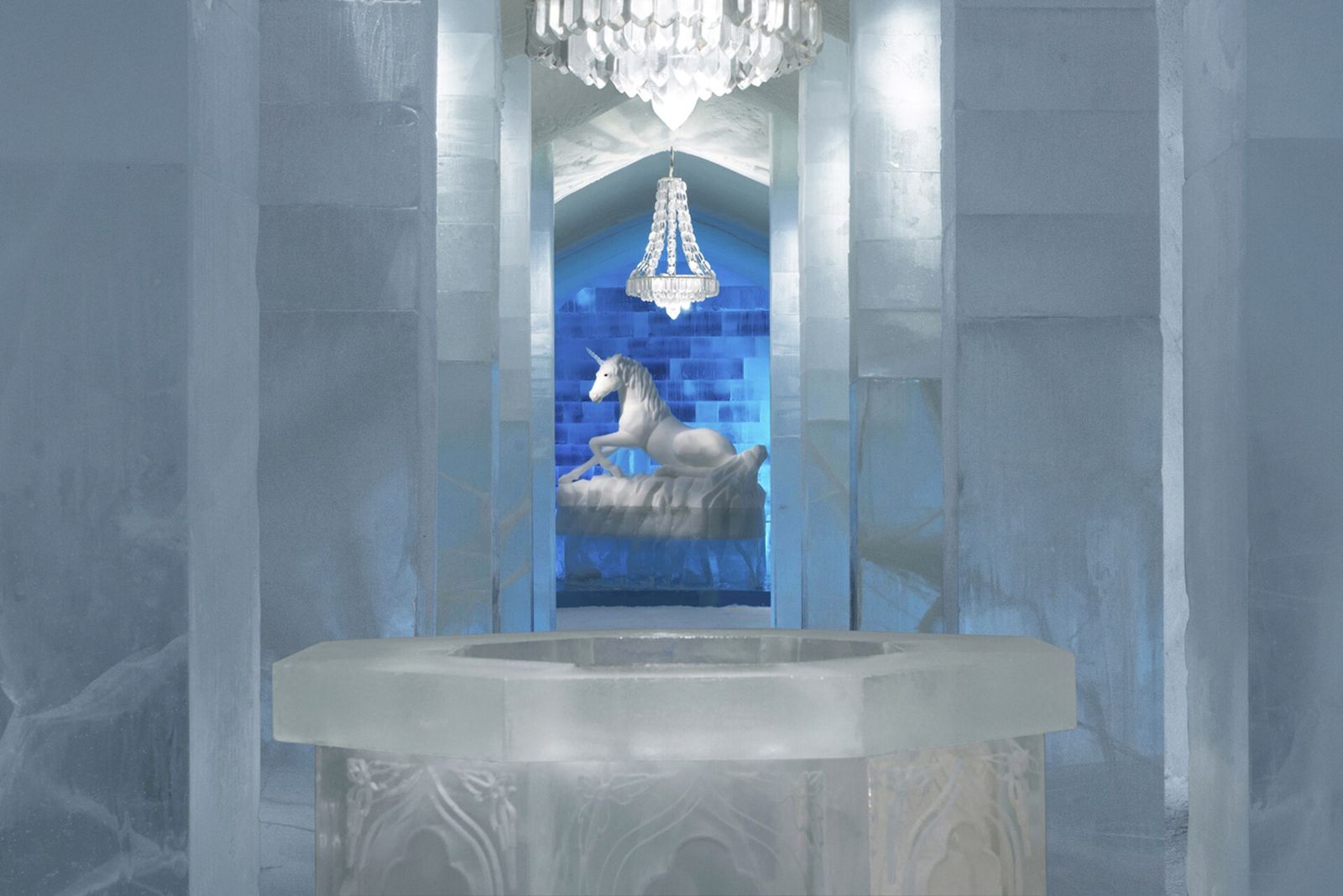
Rebuilt from Torne River ice every winter, ICEHOTEL in Swedish Lapland is part art gallery, part hotel and entirely seasonal.
Read More
Historic Hotels · 7 min read
Ashford Castle: A Lakeside Landmark in County Mayo
Cong, County Mayo, Ireland
Set beside Lough Corrib near Cong, Ashford Castle combines a long Irish history with access to woodland, water and village life.
Read More
Historic Hotels · 6 min read
The Taj Mahal Palace and Mumbai's Waterfront
Mumbai, Maharashtra, India
Facing Mumbai Harbour near the Gateway of India, the Taj Mahal Palace is a landmark whose story is closely tied to the city's maritime edge.
Read More