Restored Industrial Building
The Silo Hotel
Cape Town, South Africa
Updated · 6 min read
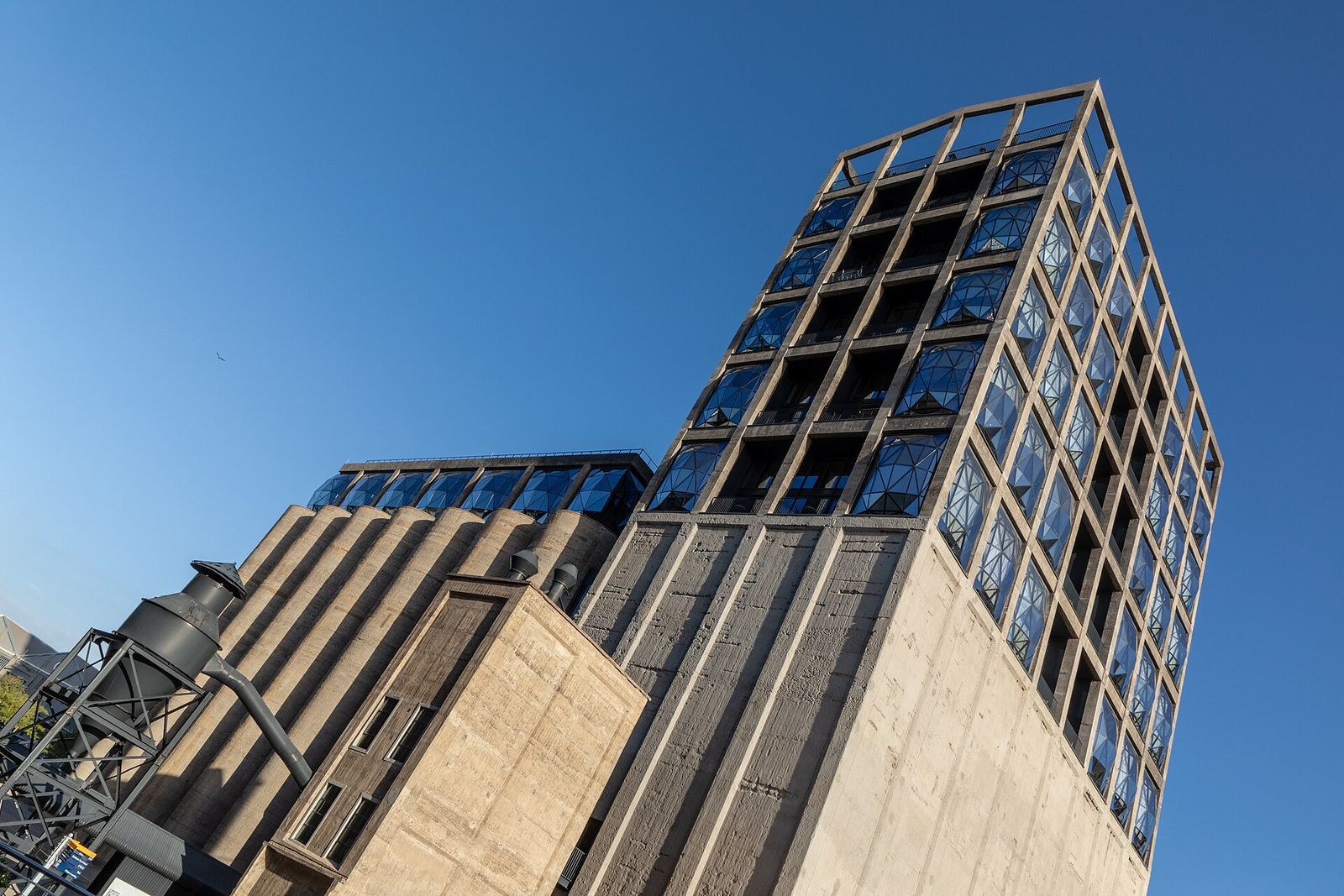
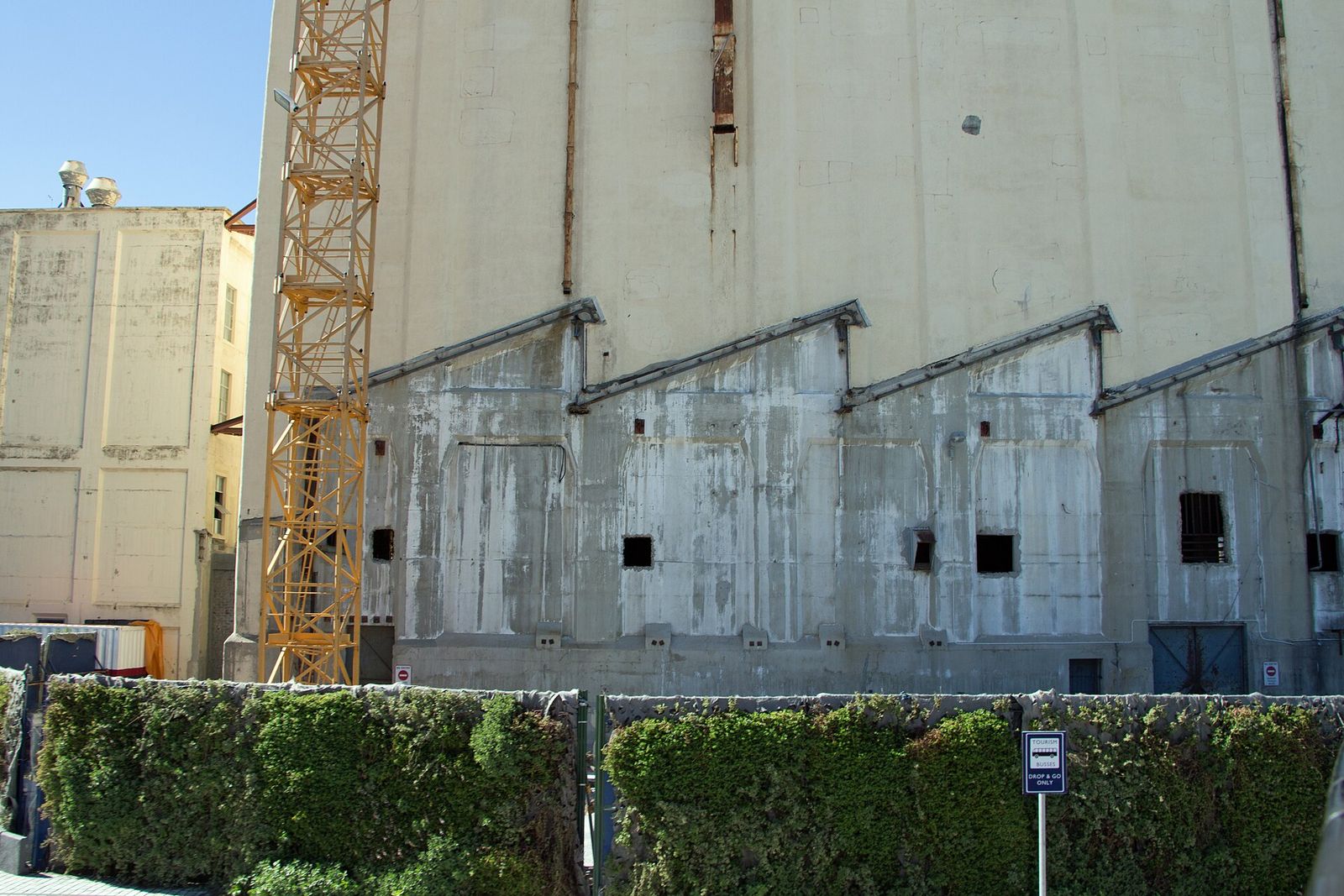
A hotel occupying the upper floors of a former grain silo at the V&A Waterfront, above the Zeitz MOCAA museum.
Architecture and atmosphere
Heatherwick Studio's pillowed, faceted glass windows bulge from the historic concrete structure.
The surroundings
The working harbour, Table Mountain and the shops and museums of the waterfront district.
A grain elevator reborn
The Grain Silo at the V&A Waterfront in Cape Town was completed in 1924. At the time, it was one of the tallest buildings in the city and a key part of the harbour's infrastructure, used to store and load grain onto ships. It consisted of a tall elevator tower, where grain was lifted and sorted, and a block of 42 concrete tubes, each over 30 metres high, where grain was stored.
As shipping methods changed, the silo gradually fell out of use, and by the early 2000s it stood empty. The V&A Waterfront, which had been redeveloping the old docks since the late 1980s, looked for a new use that would respect the building's industrial character. The solution combined a museum of contemporary art and a hotel, both of which opened in 2017.
Heatherwick's transformation
The conversion was designed by Heatherwick Studio, led by the British designer Thomas Heatherwick. The studio faced a tough challenge. The concrete tubes were dense and closed, with no natural light and no large spaces inside. Their solution was to carve a large atrium out of the centre of the tubes, cutting through the concrete in a shape based on a single grain of corn, enlarged to enormous scale. The cut edges were polished, revealing the thickness of the original walls.
The result is a soaring, cathedral like space, with curved concrete surfaces and light falling from above. It forms the entrance and heart of Zeitz Museum of Contemporary Art Africa, with galleries arranged around it in the remaining tubes and surrounding areas.
The pillowed windows
In the elevator tower above the museum, the architects created new floors for the hotel. They added faceted glass windows, made of many panes set in steel frames, that bulge outwards from the original concrete openings like pillows. By day these windows reflect the sky and the surrounding harbour. At night, lit from inside, they turn the building into a glowing lantern visible across the waterfront.
These windows are the building's most recognisable feature. From inside, they create bay like spaces where guests can sit and look out over Table Mountain, the harbour or the ocean.
Zeitz MOCAA
Zeitz Museum of Contemporary Art Africa opened in September 2017. It focuses on contemporary art from Africa and its diaspora, and is one of the largest museums of its kind. The museum has many galleries spread over several floors, with rotating exhibitions, education spaces and a rooftop sculpture garden. Its collection was initially based on the collection of Jochen Zeitz, a German businessman, and has grown since.
The museum is a non profit institution, separate from the hotel. It has its own entrance, opening hours and tickets. Even if you are not staying at the hotel, the museum is open to visitors, and the atrium alone is worth seeing.
The Silo Hotel
The Silo Hotel occupies the floors above the museum in the elevator tower. It is part of The Royal Portfolio, a South African hotel group founded by Liz Biden, who also oversaw the hotel's interior design. The interiors are bold and eclectic, mixing contemporary furniture, vintage pieces, colourful fabrics and art, much of it by African artists.
Rooms are arranged around the edges of the tower, with the pillowed windows giving views over the city, Table Mountain or the Atlantic. Public areas include a restaurant, bar and rooftop terrace with a pool. The rooftop offers some of the best views over the waterfront and the mountain. Access to the hotel's public spaces for non guests may be limited, so check in advance.
Reuse as a design idea
The silo project is often cited as an example of adaptive reuse, the practice of giving old buildings new functions instead of demolishing them. Concrete structures like grain silos are difficult to convert, because their walls are thick and their spaces narrow. Heatherwick's approach was to treat the concrete as a material to be sculpted rather than hidden. Inside the museum, many surfaces were left raw, with marks of the original construction still visible. In the hotel, parts of the old structure appear in corridors and rooms, reminding guests that they are sleeping inside a piece of industrial history. Not everyone agrees on the result. Some critics have questioned how much of the original fabric was removed to create the atrium, and others have debated the balance between luxury and public access. These debates are part of what makes the building interesting, it raises questions about how cities treat their heritage.
The setting: the V&A Waterfront
The silo stands at the southern end of the V&A Waterfront, in an area called the Silo District, which has been developed with offices, shops and apartments. The Waterfront is a busy mixed use area, with a working harbour, shopping centres, restaurants, markets, the Two Oceans Aquarium and the Nelson Mandela Gateway, from which ferries leave for Robben Island.
Table Mountain rises behind the city, visible from much of the Waterfront. The Atlantic coast, Sea Point promenade and Green Point Park are a short distance away. The city centre and the Bo Kaap neighbourhood are reachable by taxi or bus.
Industrial heritage around the harbour
The silo is not the only historic structure in the area. The Waterfront includes old docks, warehouses, a clock tower and other buildings from the 19th and early 20th centuries, many now converted into shops, restaurants and offices. Walking around the harbour, you can see how the port has evolved, from sailing ships to modern container traffic, and how industrial spaces have been adapted for new uses.
Before you visit: what to check
If you plan to visit Zeitz MOCAA, check current exhibitions, opening hours and ticket details on the museum's website. Some days have reduced prices or special events. Guided tours are sometimes offered. For the hotel, check whether non guests can reserve a table at the restaurant or bar if you want to see the interiors and rooftop.
Cape Town's weather varies by season. Summers, from December to February, are warm and dry but windy. Winters, from June to August, are cooler and wetter. The southeasterly wind, known as the Cape Doctor, can be strong in summer. As in any big city, take reasonable precautions, especially at night, and use registered taxis or ride hailing apps.
Practical tips for visiting The Silo Hotel and Zeitz MOCAA
- Visit Zeitz MOCAA early in the day to see the atrium when its quieter.
- Look at the silo from different angles, including from the harbour and from higher ground in the city.
- Check if non guests can book a table at the hotel restaurant or rooftop bar.
- Combine your visit with a Robben Island tour from the nearby Nelson Mandela Gateway.
- Bring a light jacket. Even on sunny days, the wind off the sea can be cool.
- Come back at night to see the windows glowing over the waterfront, its a different building after dark.
Questions travellers ask
When was the Grain Silo in Cape Town built?
The silo was completed in 1924 and used for storing and loading grain until it fell out of use in the early 2000s.
Who designed the conversion of the silo?
The conversion was designed by Heatherwick Studio, led by Thomas Heatherwick, and opened in 2017.
Is Zeitz MOCAA part of The Silo Hotel?
No. Zeitz MOCAA is a separate non profit museum with its own tickets and opening hours, located in the lower part of the same building.