Historic Hotel
The Taj Mahal Palace
Mumbai, India
Updated · 6 min read
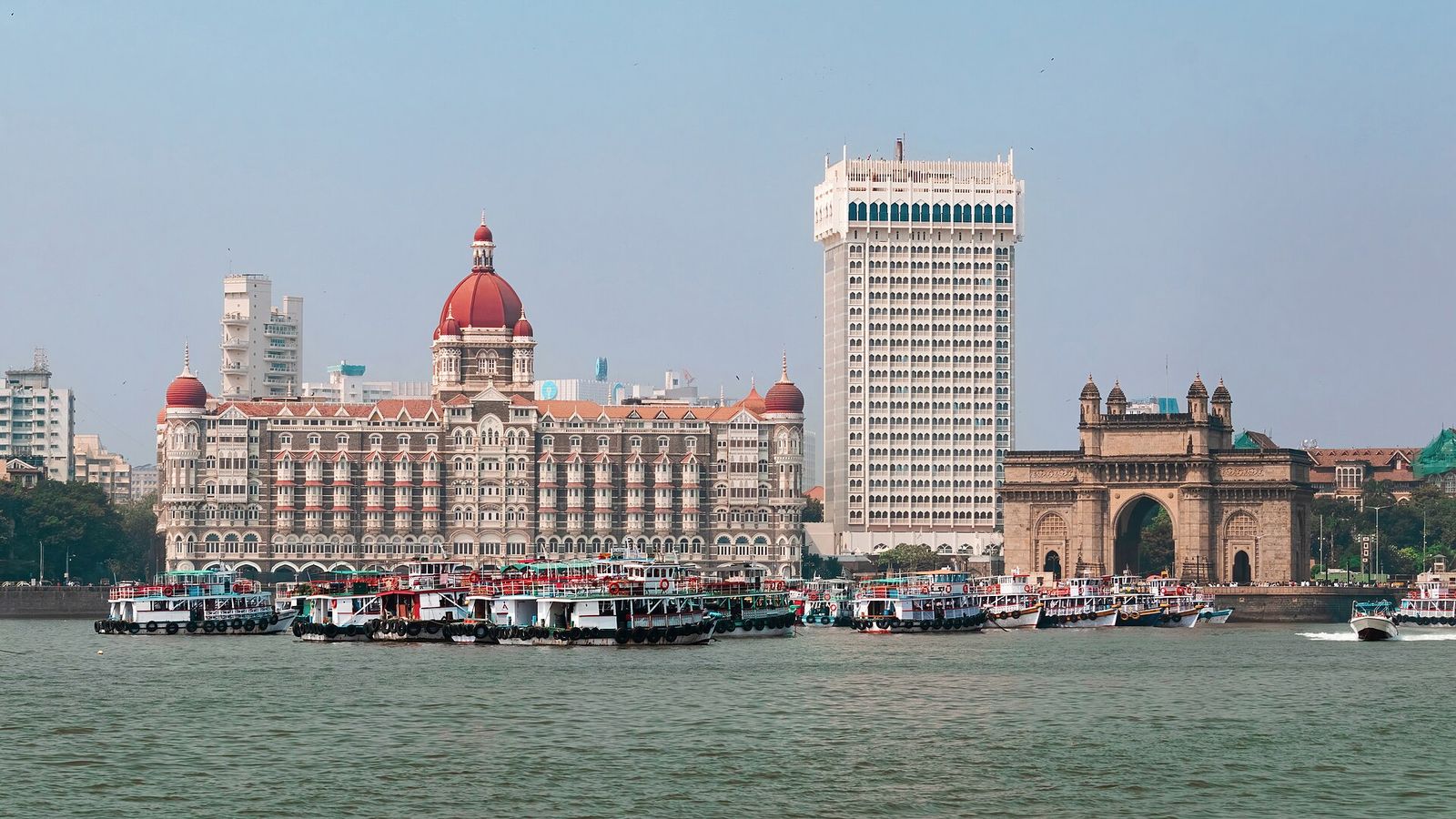
Opened in 1903 on the Apollo Bunder waterfront, the hotel is one of Mumbai's best known landmarks, facing the Gateway of India across the harbour promenade.
Architecture and atmosphere
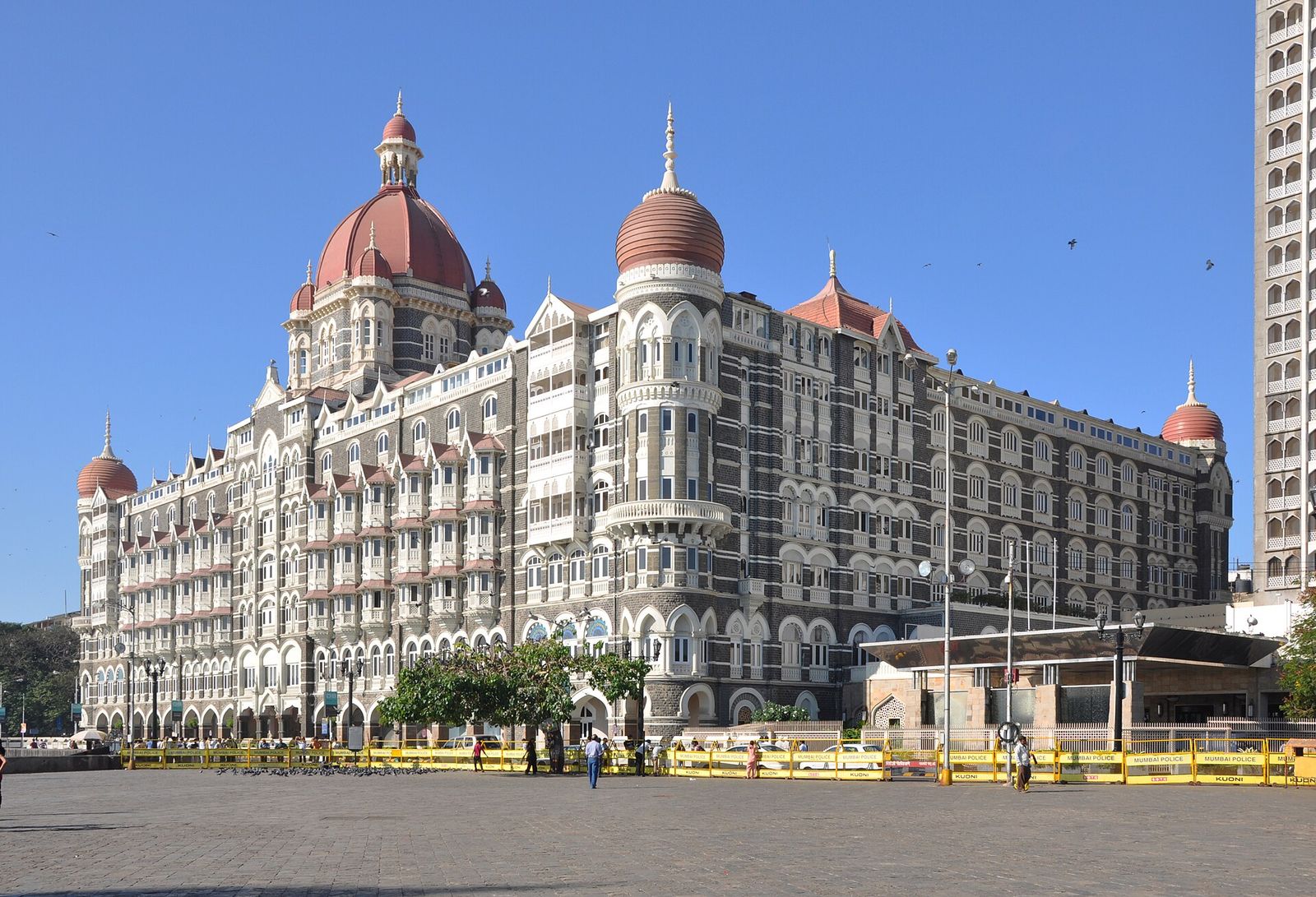
A red-domed facade blending Indo-Saracenic and European influences, with a grand central stairway and long arcaded corridors.
The surroundings
Colaba's busy streets, the Gateway of India and the waters of Mumbai Harbour lie just outside.
A building that faced the sea first
When the Taj Mahal Palace opened in December 1903, the Gateway of India did not yet exist. The hotel stood alone at Apollo Bunder, facing the harbour, with ships arriving from Europe and across the Indian Ocean. Today the Gateway, completed in 1924, stands across the promenade, and the two are photographed together so often that it is easy to forget the hotel came first.
The hotel was commissioned by Jamsetji Nusserwanji Tata, a Parsi industrialist whose company later grew into the Tata Group. Many stories are told about why he decided to build it. The most popular claims that he was refused entry to another hotel because of his race. Historians debate this, and there is no clear proof. What is certain is that he wanted Bombay, as the city was then called, to have a hotel that matched its ambition as a great port.
Architects and style
The original design is usually credited to Indian architects Sitaram Khanderao Vaidya and D. N. Mirza, with the work completed by the English engineer W. A. Chambers after Vaidya's death. The style is often described as Indo Saracenic, blending elements of Indian, Islamic and European architecture. Look for the pointed arches, the onion shaped domes and turrets, the balconies with carved details and the large central red dome, which has become a key part of the Mumbai skyline.
Stone and brick were used for the structure, with a lot of decorative detail that rewards a slow look. From the harbour side the building presents a long, symmetrical facade, while the city side is busier and more complex.
Inside the palace wing
The original building is now called the Palace wing. Its most famous feature is the grand staircase, which rises around an open well beneath the central dome. Corridors lined with art, antiques and carpets connect rooms and suites, many with high ceilings and views over the harbour or the city. The hotel has been refurbished several times, so modern comforts sit alongside heritage features.
The Tower
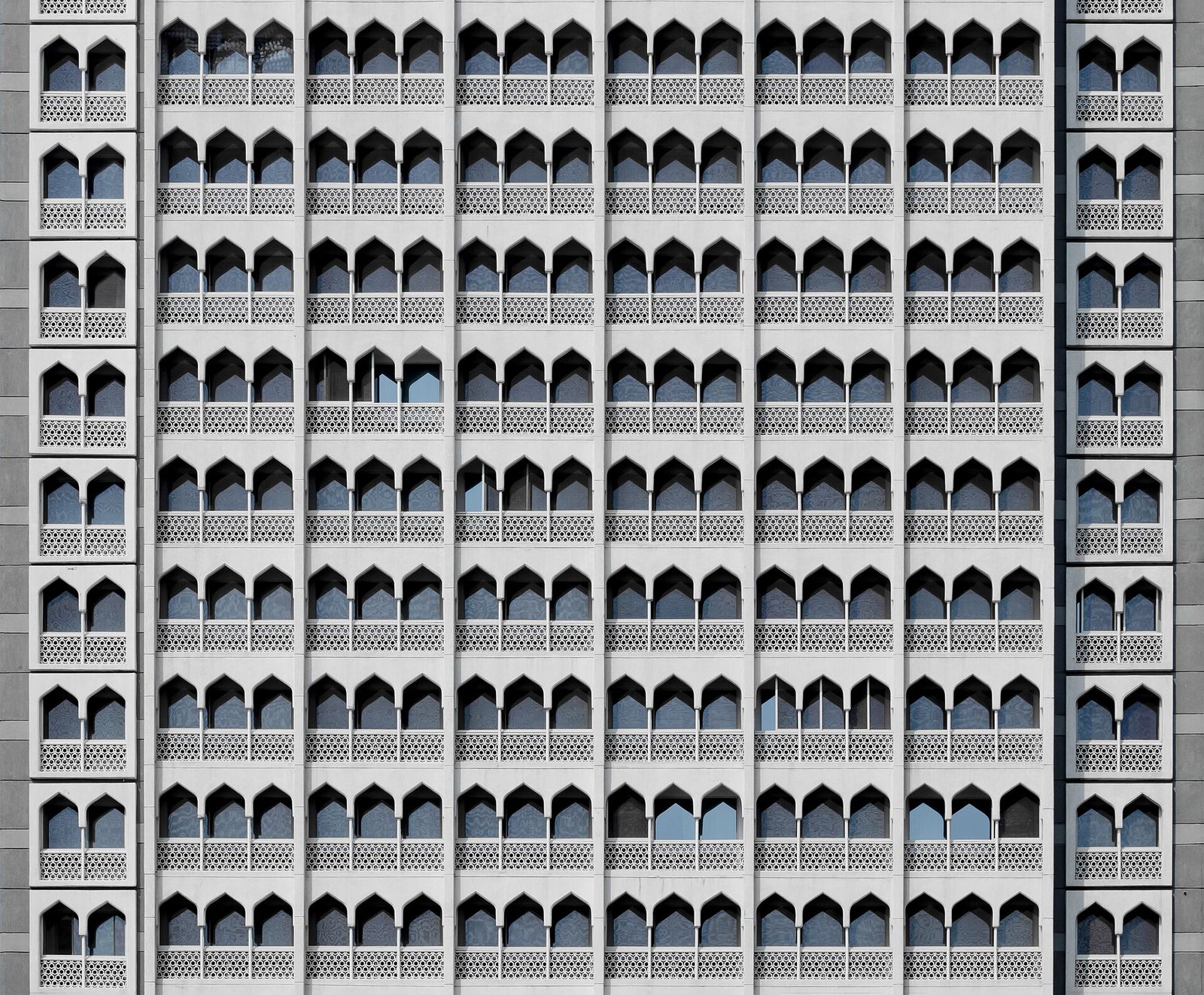
In 1973 a modern high rise wing, the Taj Mahal Tower, was added next to the palace building. Its design is very different, with a simpler facade and larger windows, though arches on the upper floors refer back to the palace. The Tower offers wider views, especially from upper floors. Guests sometimes choose between the two wings based on whether they prefer heritage character or panorama. It is one hotel, with shared facilities, but the experience of each wing is distinct.
Spaces open to the city
Several of the hotel's restaurants and lounges are well known in Mumbai. The Sea Lounge, looking over the harbour, has long been a place where families meet for tea and where, according to local tradition, many arranged marriage meetings took place. The Harbour Bar has been described by the hotel as one of the oldest licensed bars in the city. Shops and galleries are also found on the ground floor. Access to these spaces is subject to security checks at the entrance.
2008 and after
On 26 November 2008, terrorists attacked several sites in Mumbai, including the Taj Mahal Palace. The hotel was badly damaged by fire and fighting, and many people were killed in the city over three days, including guests and staff at the hotel. The building was restored and reopened in stages, and a memorial inside honours those who died. Security arrangements were strengthened afterwards. Visitors today pass through screening at the entrances, which is now a normal part of arrival.
This history is still close for many people in Mumbai. If you visit, be respectful in conversation and at the memorial.
Art and collections
The hotel has assembled a significant collection of art and antiques over more than a century, including paintings by Indian modern artists, textiles, furniture and decorative objects. Pieces are displayed in corridors, lobbies and suites, and the collection has been described as one of the most important private hotel collections in India. Some works were damaged in 2008 and later restored or replaced. Walking slowly through the palace corridors, you can see how the hotel has always presented itself as a showcase of Indian craftsmanship as well as European style comfort. If you are interested, staff have sometimes offered heritage walks for guests that explain the building and its history. Ask at the front desk whether one is running during your stay, they are not always scheduled.
The setting: Apollo Bunder and Colaba
The hotel stands on the waterfront at Apollo Bunder, at the southern tip of the city near Colaba. The promenade in front, around the Gateway of India, is one of the busiest public spaces in Mumbai, full of families, tourists, photographers, vendors and boats. Ferries leave from here for Elephanta Island and other destinations around the harbour.
Behind the hotel, Colaba's streets are a mix of old apartment buildings, cafés, shops and markets. Colaba Causeway is lively and crowded. A short walk north leads to Kala Ghoda, the arts district, and to major museums and Victorian buildings. Marine Drive and the Oval Maidan are a short taxi ride away.
Heritage around the hotel
The hotel is part of a wider heritage landscape. Mumbai's Victorian Gothic and Art Deco Ensembles were inscribed as a UNESCO World Heritage Site in 2018, and the Chhatrapati Shivaji Maharaj Terminus railway station has been listed since 2004. Walking from the hotel north through Kala Ghoda to the station is a good way to understand how the city developed in the colonial era and after.
Before you visit: what to check
The hotel is a working luxury hotel, and while some spaces are open to visitors, others are reserved for guests. Check with the hotel whether restaurants or lounges require reservations, especially for afternoon tea or weekend meals. Dress smart casual if you plan to dine. Allow time for security at the entrance.
Weather matters in Mumbai. From June to September the monsoon brings heavy rain, which can disrupt traffic and ferries. The drier months from November to February are usually the most comfortable. Mumbai's traffic is notoriously slow at peak hours, and the drive from the airport can take a long time, so plan your arrival with some margin.
Practical tips for visiting the Taj Mahal Palace
- Ask which wing your room is in if staying, and decide whether heritage character or views matter more to you.
- Expect security screening at the entrance and allow a few extra minutes.
- Book ahead for popular restaurants or afternoon tea at the Sea Lounge.
- Visit the Gateway of India early in the morning, before crowds and heat build.
- Take a short ferry ride in the harbour to see the hotel's facade from the water, it looks very different from there.
- Remember that the 2008 memorial is a place of mourning, so behave with respect.
Questions travellers ask
Is the Taj Mahal Palace older than the Gateway of India?
Yes. The hotel opened in 1903, while the Gateway of India was completed in 1924.
What is the difference between the Palace wing and the Tower?
The Palace wing is the original 1903 building with heritage interiors, while the Tower was added in 1973 and offers more modern rooms and wider views.
Can visitors enter the hotel without staying?
Restaurants, lounges and shops are generally open to visitors after security screening. Some areas are reserved for guests.