Former Monastery
Parador de León
León, Spain
Updated · 6 min read
Housed in the former Convento de San Marcos, a building long associated with pilgrims on the Camino de Santiago, now part of Spain's state-run Paradores network.
Architecture and atmosphere
One of Spain's notable Plateresque facades, with a cloister, church and richly carved stonework.
The surroundings
Set beside the Bernesga River, a short walk from León's cathedral and old town.
A façade that tells a story
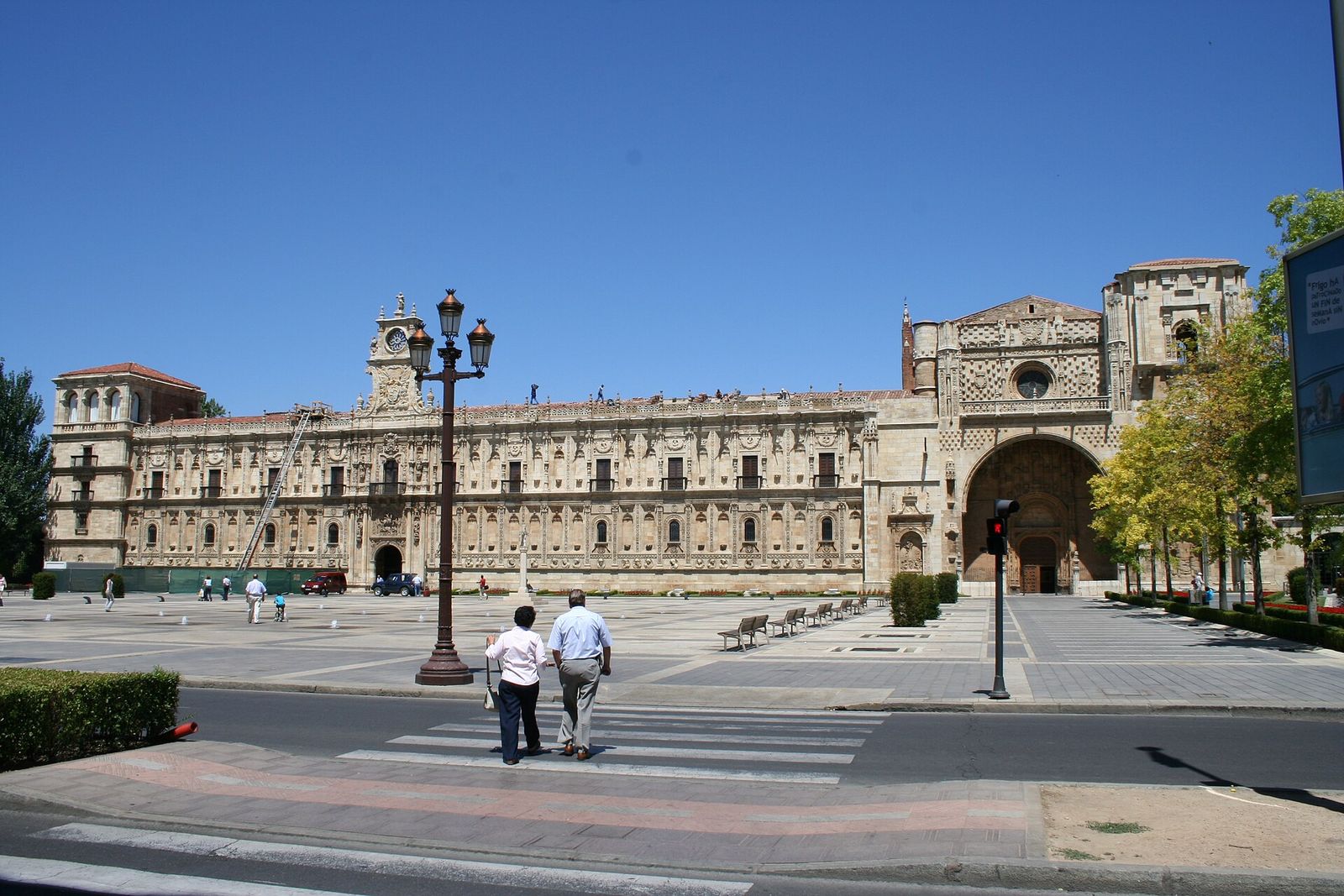
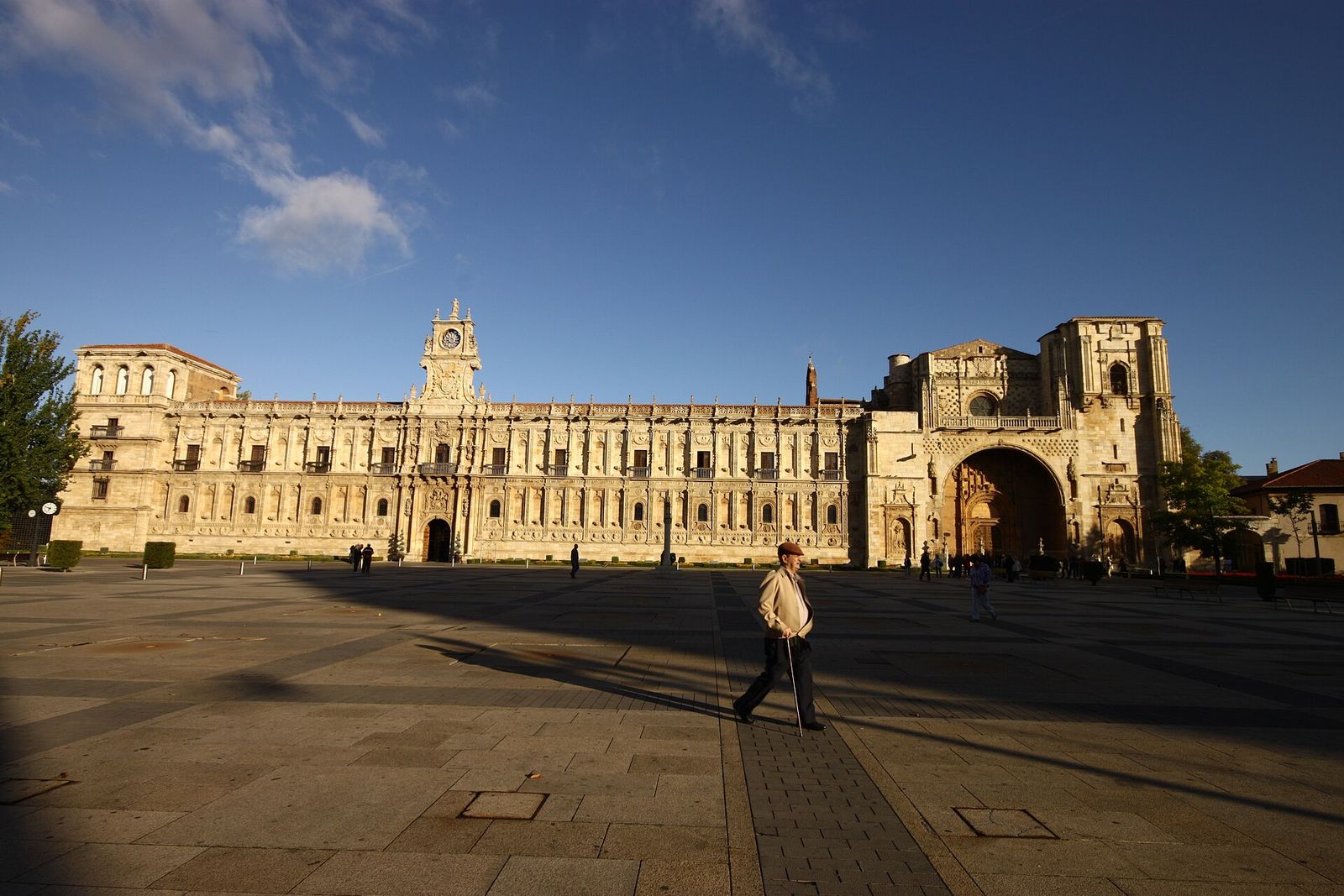
Stand in the Plaza de San Marcos and look up. The main façade of the former convent stretches for around a hundred metres along the square, a long horizontal wall of pale stone covered in carved decoration. It is one of the great works of the Spanish Plateresque, a style of the early 16th century that treated stone like a silversmith treats metal, with fine, dense ornament. The name comes from platero, silversmith.
Look closer and the details start to separate. There are rows of medallions with carved heads, representing biblical, classical and Spanish historical figures, from Roman emperors to Spanish monarchs. Pilasters and friezes are covered with foliage, cherubs and grotesques. Scallop shells, the symbol of Saint James and the pilgrims who walk to Santiago de Compostela, appear repeatedly, including large ones on the church front. Above the main door, a later Baroque section adds a more theatrical touch, with an equestrian figure of Saint James.
From pilgrims' hospital to convent
The site has been linked with pilgrims for a very long time. In the 12th century, a hospital for pilgrims on the road to Santiago was founded here, on the western edge of León near the Bernesga River. It was associated with the Order of Santiago, a military and religious order founded in the same era to protect pilgrims and fight in the Reconquista. The order made San Marcos one of its main houses.
In the early 16th century, King Ferdinand the Catholic supported the construction of a much grander building, and work began around 1515. The project went on for a very long time, through the 16th and into the 18th century, which explains the mix of styles. The church, cloister, sacristy and main façade were built over different phases, and each carries the taste of its time.
Quevedo's prison
In the 17th century, the poet and satirist Francisco de Quevedo, one of the leading writers of the Spanish Golden Age, was held prisoner at San Marcos for about four years, from 1639 to 1643, after falling out with the powerful Count Duke of Olivares. Quevedo wrote about the cold and damp of his cell, and his imprisonment is one of the best known episodes in the building's history.
Darker chapters of the 20th century
In the 19th and 20th centuries San Marcos was used for many purposes, including as a school, a military barracks and a veterinary school. During the Spanish Civil War and afterwards, it was used as a concentration camp and prison, where thousands of people were held in harsh conditions. Many were political prisoners. This painful period is now commemorated, and it is an important part of the building's memory.
A parador since the 1960s
In the 1960s the building was converted into a parador, part of Spain's state run network of hotels in historic buildings. It became one of the most celebrated in the network. In recent years it went through a long and complex renovation, updating rooms and systems while restoring historic spaces. Check the official Paradores website for the latest information about rooms and facilities.
Inside the convent
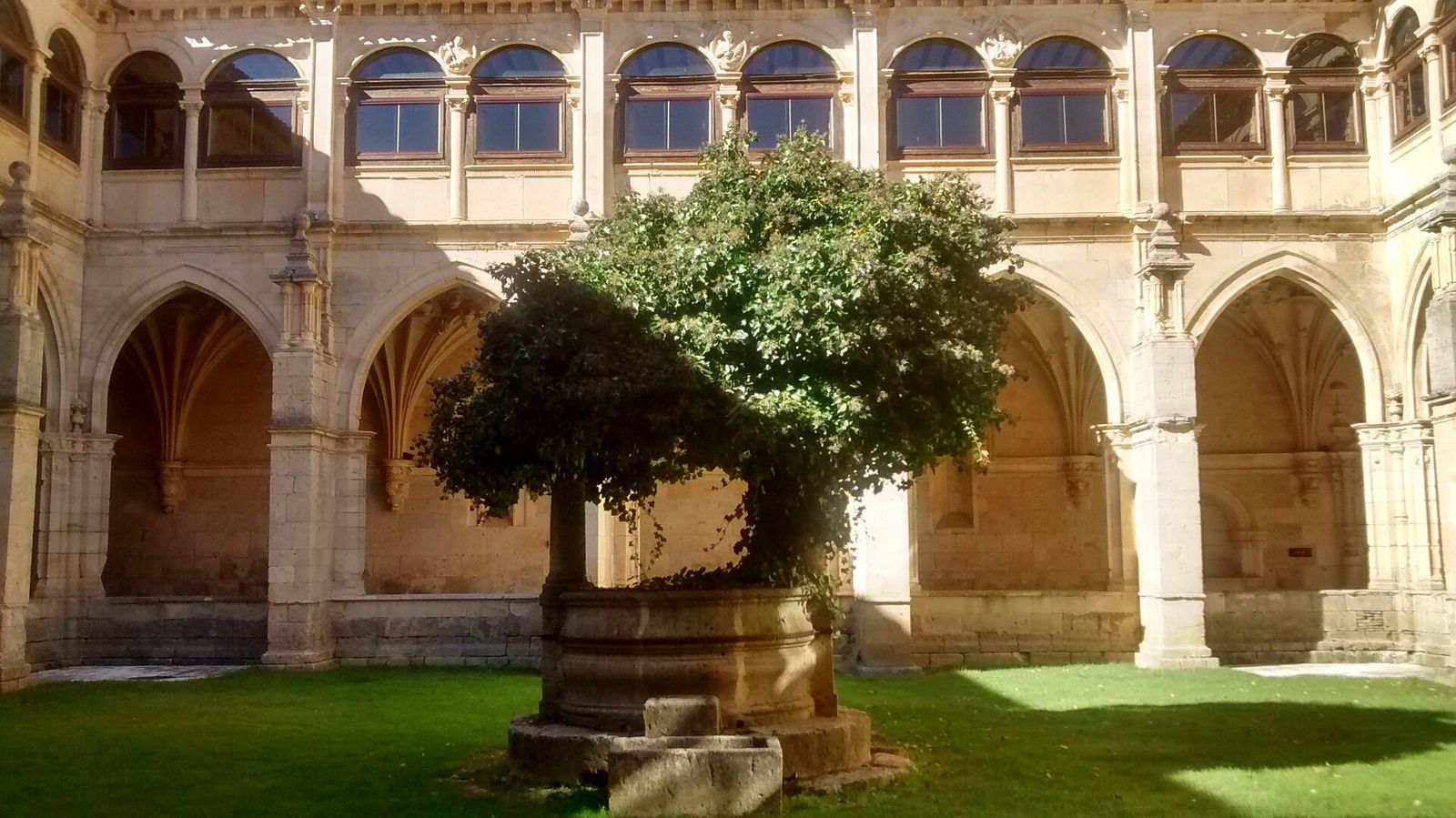
The heart of the building is the cloister, with arcades around a central garden and a mix of Gothic and Renaissance details. Around it are former chapter rooms, staircases and halls, some with carved wooden ceilings. The grand staircase and some public spaces display art works, including contemporary pieces in dialogue with the historic architecture. Rooms are found in both the historic building and a modern wing added later, with different styles and views. If staying in the historic part matters to you, ask about it when you choose.
The church and the museum
The church of San Marcos, attached to the convent, has a striking façade covered with scallop shells and a Gothic interior. Part of the complex, including the church, sacristy and parts of the cloister, has been linked to the Museo de León, with collections of religious art and archaeology. Opening hours for these spaces can be different from the hotel, so check them separately.
The setting: by the Bernesga
The parador stands at the western end of León, beside the Bernesga River and the old stone bridge of San Marcos, which the Camino de Santiago crosses as it leaves the city. In front of the building, the square has a stone cross and a bronze statue of a seated pilgrim resting at the foot of the cross, a popular spot for photos. Gardens and riverside paths run along the Bernesga.
From the parador, the centre of León is a walk of about fifteen to twenty minutes. Along the way you pass the Basilica of San Isidoro, with its Romanesque Royal Pantheon, and reach the cathedral, famous for its stained glass, and Casa Botines by Gaudí. The Barrio Húmedo, the old quarter around the Plaza Mayor, is known for tapas bars.
Food at San Marcos and around
The parador's restaurant usually focuses on the cooking of León and the surrounding provinces. Look for cecina, a cured and smoked beef with protected status, morcilla de León, a blood sausage often made with onion, and botillo from El Bierzo, a hearty pork dish usually eaten in winter. Local wines from El Bierzo and Tierra de León are well worth trying, especialy the reds made from Mencía grapes. In the city, many bars still serve a small free tapa with each drink, so an evening wandering the Barrio Húmedo can easily replace a formal dinner.
Ask the staff about any temporary exhibitions in the public spaces, they change from time to time.
Before you visit: what to check
San Marcos is both a hotel and a historic monument. If you are not staying, check whether you can visit the cloister and other public spaces, and whether guided visits are offered. The church and museum spaces may have their own entrance and timetable.
León sits on a high plateau, at around 800 metres, and winters can be cold, with frost and sometimes snow. Summers are warm but evenings can be cool. Holy Week, Semana Santa, is a major event with processions, and hotels can fill up quickly. If you are a pilgrim on the Camino, remember that parador rooms are not pilgrim hostels and need to be reserved in advance like any other hotel.
Practical tips for visiting the Parador de León
- Spend time in front of the façade at different times of day. Low evening light brings out the carving beautifully.
- Check opening times for the church and museum spaces separately from the hotel.
- Ask whether your room is in the historic convent or the modern wing, as the feel is quite different.
- Combine a visit with a walk to San Isidoro and the cathedral, both within easy reach.
- Bring a warm layer even in summer, León nights can be chilly on the plateau.
- Remember the building's 20th century history and visit the memorial spaces with respect.
Questions travellers ask
Why is the parador called San Marcos?
The building is the former Convento de San Marcos, a house of the Order of Santiago founded on the site of a 12th century pilgrims' hospital.
Can I visit the cloister without staying at the parador?
Access to public spaces for non guests can vary. Check with the parador or the local tourist office about current visiting arrangements.
Is the Parador de León on the Camino de Santiago?
Yes. The Camino Francés passes directly in front of the building and crosses the Bernesga on the nearby San Marcos bridge.