Parador de León and the Former Monastery of San Marcos
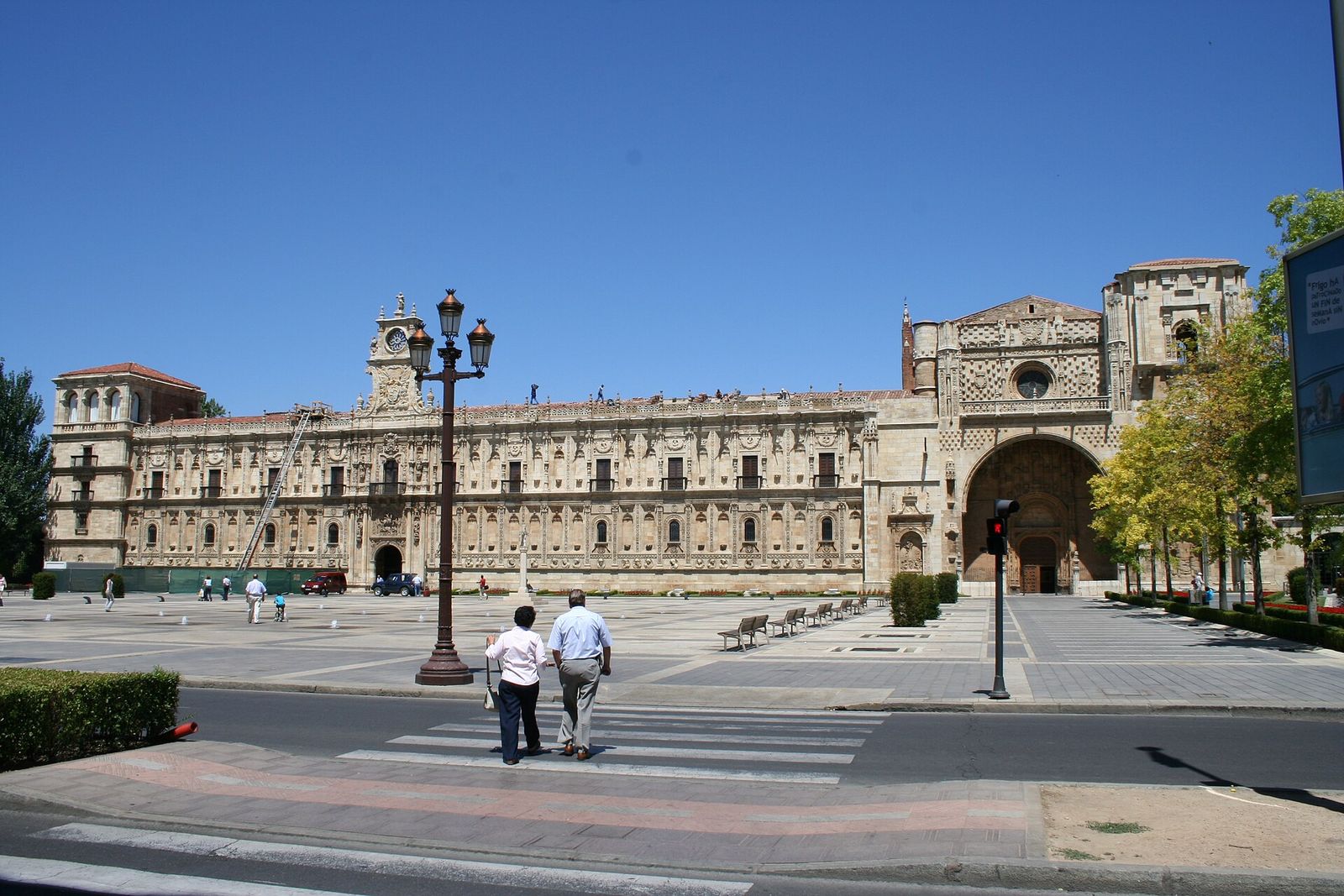
On the western edge of central León, beside the Bernesga River, a long stone facade covered in carved scallop shells, medallions and pilasters catches the evening sun. This is San Marcos, a former monastery and pilgrims' hospital that has served as a convent, prison, school, barracks and now one of Spain's most celebrated paradores. Staying here, or even just walking past it on the Camino de Santiago, is a lesson in how a single building can hold many centuries of Spanish history.
From monastery to landmark
The origins of San Marcos go back to the 12th century, when a hospital for pilgrims was founded on this spot near the river, on the route to Santiago de Compostela. It later became linked to the Order of Santiago, a religious and military order founded in the same century, and served as one of its important houses.
The building you see today was begun in the early 16th century, under King Ferdinand the Catholic. Its great facade is one of the finest examples of the Spanish Plateresque style, named for its delicate, almost silversmith like ornament. Look closely and you will find dozens of carved medallions with portraits of historical and mythical figures, as well as the scallop shell, the symbol of Saint James and of pilgrims. Construction went on for a long time, and later work added Baroque elements, including towers and decoration over the main door.
A building with darker chapters
San Marcos has not always been a place of rest. In the 17th century the poet and satirist Francisco de Quevedo was imprisoned here for several years, an episode often recalled in histories of the building. During the Spanish Civil War, the complex was used as a prison and concentration camp, and many people were held here in terrible conditions. This painful history is part of the building's story and is remembered today.
A parador since the 1960s
In the 1960s San Marcos became part of the Paradores network, the state run chain of hotels set in historic buildings across Spain. It later underwent a long and careful renovation and reopened in recent years with updated rooms and public spaces. Part of the complex, including the church and some of the cloister areas, is linked to the city's museum collections and can be visited separately.
Seeing the building
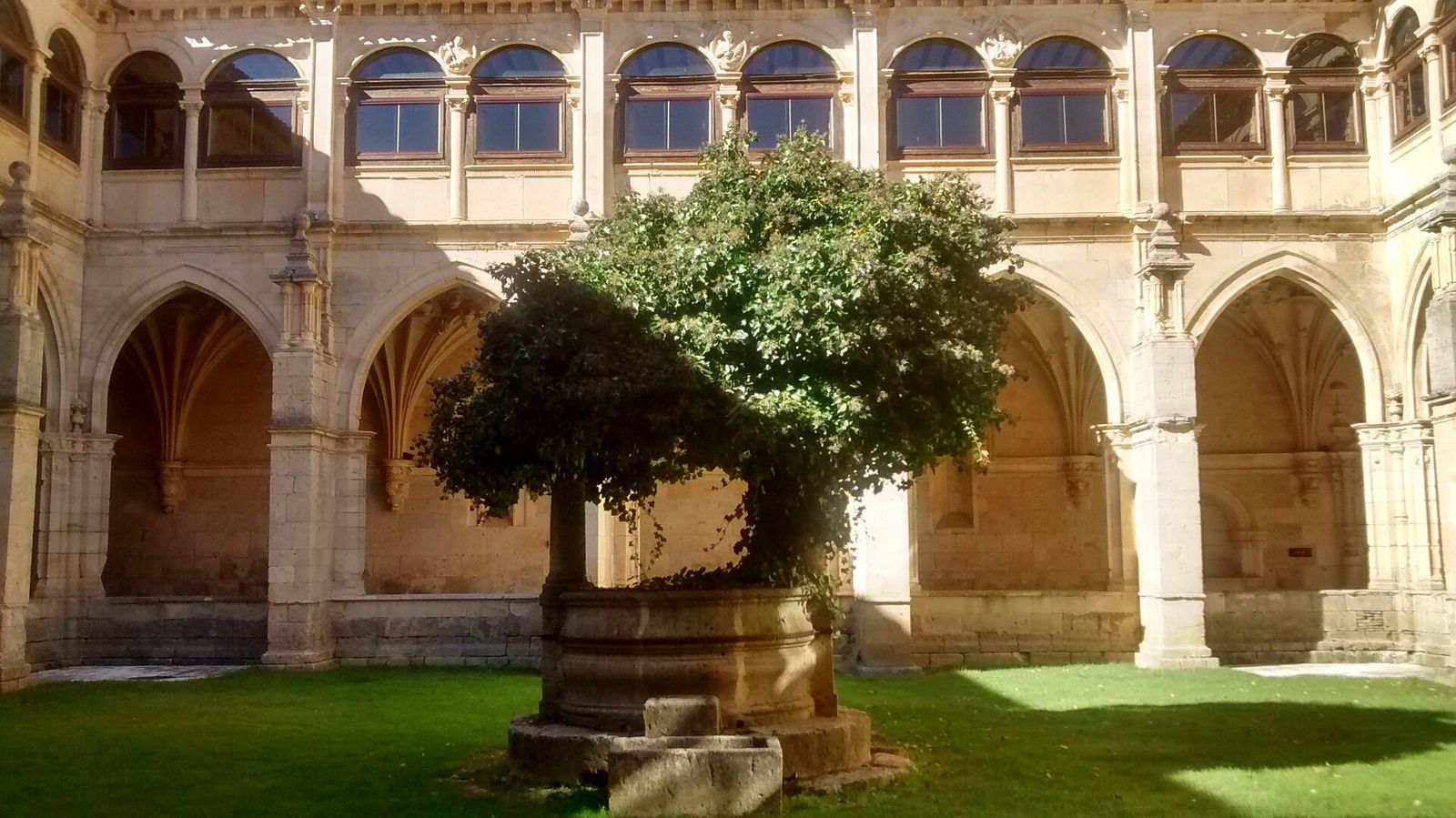
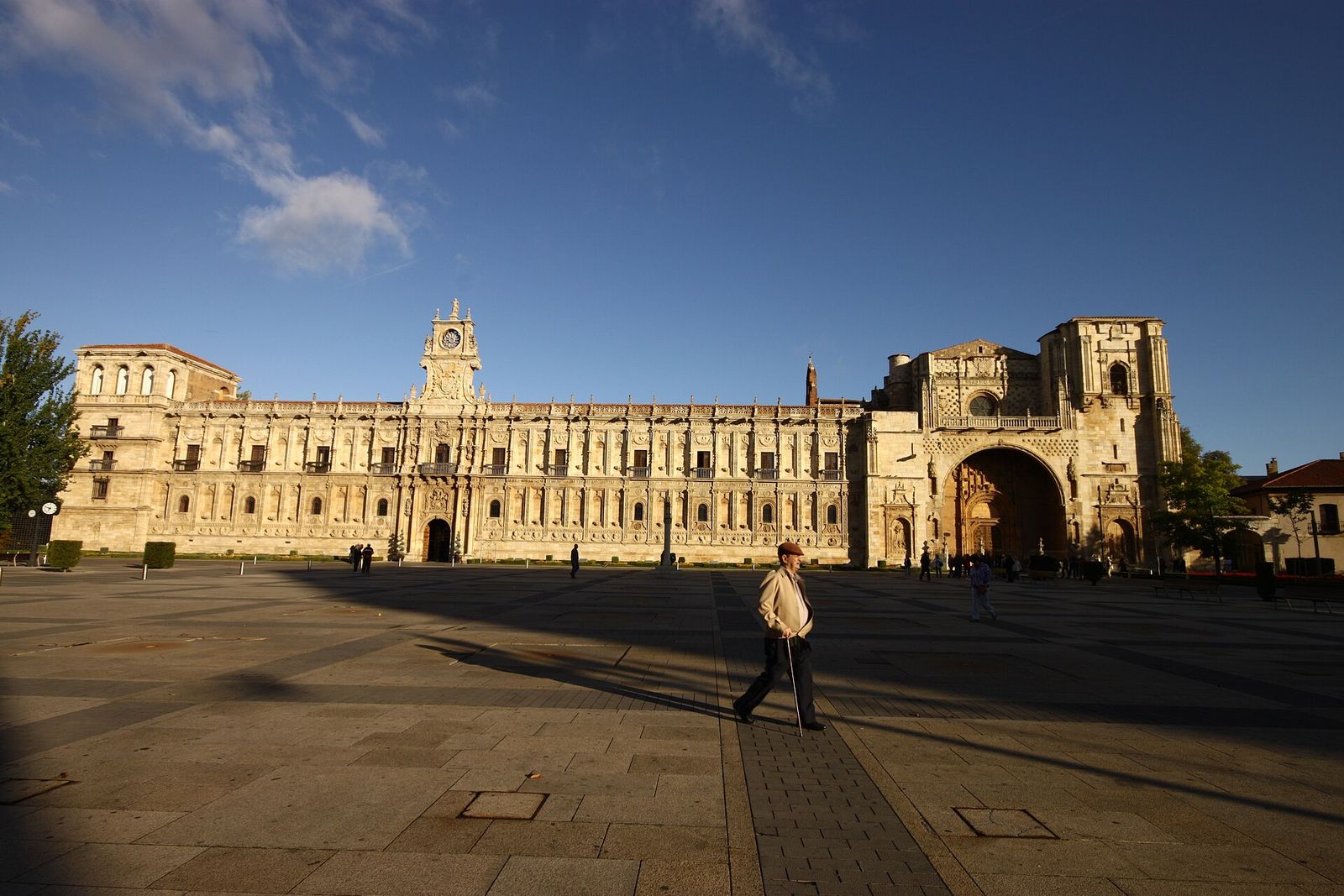
Even if you are not staying, you can admire the facade from the square in front, the Plaza de San Marcos, which comes alive in the evening. Pilgrims often stop here, sitting on the steps or by the stone cross, while children play around the bronze statue of a resting pilgrim. The church of San Marcos, with its scallop shell decorations, and the cloister are among the most beautiful spaces of the complex. Opening times for visitors can vary, so check with the parador or the local tourist office.
Inside the hotel, the public areas include the cloister, the grand staircase and rooms with historic ceilings and art works. Some areas are reserved for guests, which is fair enough, its still a working hotel.
Exploring León
León is a compact, walkable city with a lively old town and a very relaxed pace. It makes a rewarding stop on a journey across northern Spain.
León Cathedral
The Gothic cathedral of Santa María de León is famous for its stained glass windows, which cover a vast area and fill the interior with colored light. On a sunny day, the effect is extraordinary. The cathedral is sometimes called "Pulchra Leonina", the beautiful one of León. Visit in the late morning or afternoon, when sunlight falls strongly through the glass.
San Isidoro and the Royal Pantheon
The Basilica of San Isidoro is one of the most important Romanesque buildings in Spain. Its Royal Pantheon, the burial place of early kings of León, is decorated with remarkable 12th century frescoes, often described as the "Sistine Chapel of Romanesque art". The adjoining museum displays treasures including a precious chalice associated by some with the Holy Grail.
Gaudí in León
Casa Botines, a neo Gothic building designed by Antoni Gaudí and completed in the 1890s, stands in the city center. It is one of only a few works by Gaudí outside Catalonia, and now houses a museum and exhibition space.
Tapas and the Barrio Húmedo
León is known throughout Spain for its generous tapas culture. In many bars, especially in the Barrio Húmedo, the old quarter near the Plaza Mayor, ordering a drink often comes with a small free tapa. Local specialities include cecina, a cured beef similar to jamón, morcilla de León, a blood sausage, and hearty dishes like cocido maragato from the nearby Maragatería region. The custom of moving from bar to bar, a little drink and a bite in each, is the best way to get a feel for the city's evenings.
The Camino de Santiago
León is one of the main cities on the Camino Francés, the most popular route of the Camino de Santiago. Pilgrims arrive daily from the east and continue west towards Astorga and, eventually, Santiago de Compostela. The route passes right in front of San Marcos and crosses the Bernesga River on the old stone bridge nearby. Many pilgrims treat themselves to a stop at the parador as a milestone, while others simply rest in the square. You will see the yellow arrows and scallop shell markers all over the city.
A day trip to Astorga
West of León, the small city of Astorga makes an easy day trip. It has Roman walls, a Gothic cathedral and another Gaudí building, the Episcopal Palace, which looks like a fairy tale castle in grey granite. Astorga is also known for chocolate making, and has a small museum dedicated to it, which is more interesting then it sounds.
When to go
Spring and autumn are particularly pleasant for exploring León on foot. Summer days can be hot, but evenings are often cooler than further south, as León sits on a high plateau at around 800 metres. Winters are cold and can bring frost and occasional snow. Holy Week, Semana Santa, is one of the city's most important events, with dramatic processions through the streets. In late June, the festivals of San Juan and San Pedro bring concerts and celebrations.
Getting there
León is well connected by rail. High speed trains run from Madrid, taking roughly two hours, and the line continues to other cities in northern Spain. The station is a short walk or taxi ride from the parador. León also has a small airport with limited domestic flights, but most international visitors fly into Madrid or another major airport and continue by train. By car, the city is linked to the main motorways across northern Spain, and the parador has parking, though it is sensible to confirm availability in advance.
Practical tips for a San Marcos stay
- Walk around the outside of the building first, at different times of day, to appreciate the facade and its carvings.
- Check visiting hours for the church and cloister, as they can differ from the hotel's own schedule.
- Try the tapas route in the Barrio Húmedo in the evening, remembering that Spanish dinner times are late.
- Visit the cathedral on a sunny day if you can. The stained glass looks very different under cloud.
- If you are walking the Camino, carry your pilgrim credential and ask at the reception about stamping it.
- Pack a warm layer even in summer, since León evenings can be cool on the high plateau.
Questions travellers ask
Can I visit San Marcos without staying at the parador?
Yes, the facade and square are public, and parts of the complex such as the church and cloister are often open to visitors. Check current opening times locally.
Is León on the Camino de Santiago?
Yes. León is a major stop on the Camino Francés, and the route passes directly in front of San Marcos.
How long does the train from Madrid to León take?
High speed trains take roughly two hours, depending on the service and number of stops.
Clifton Inn is an independent travel information website and does not take bookings. Details such as opening seasons and access can change, so please confirm current information with the relevant provider.
Related stories
Historic Hotels · 7 min read
Ashford Castle: A Lakeside Landmark in County Mayo
Cong, County Mayo, Ireland
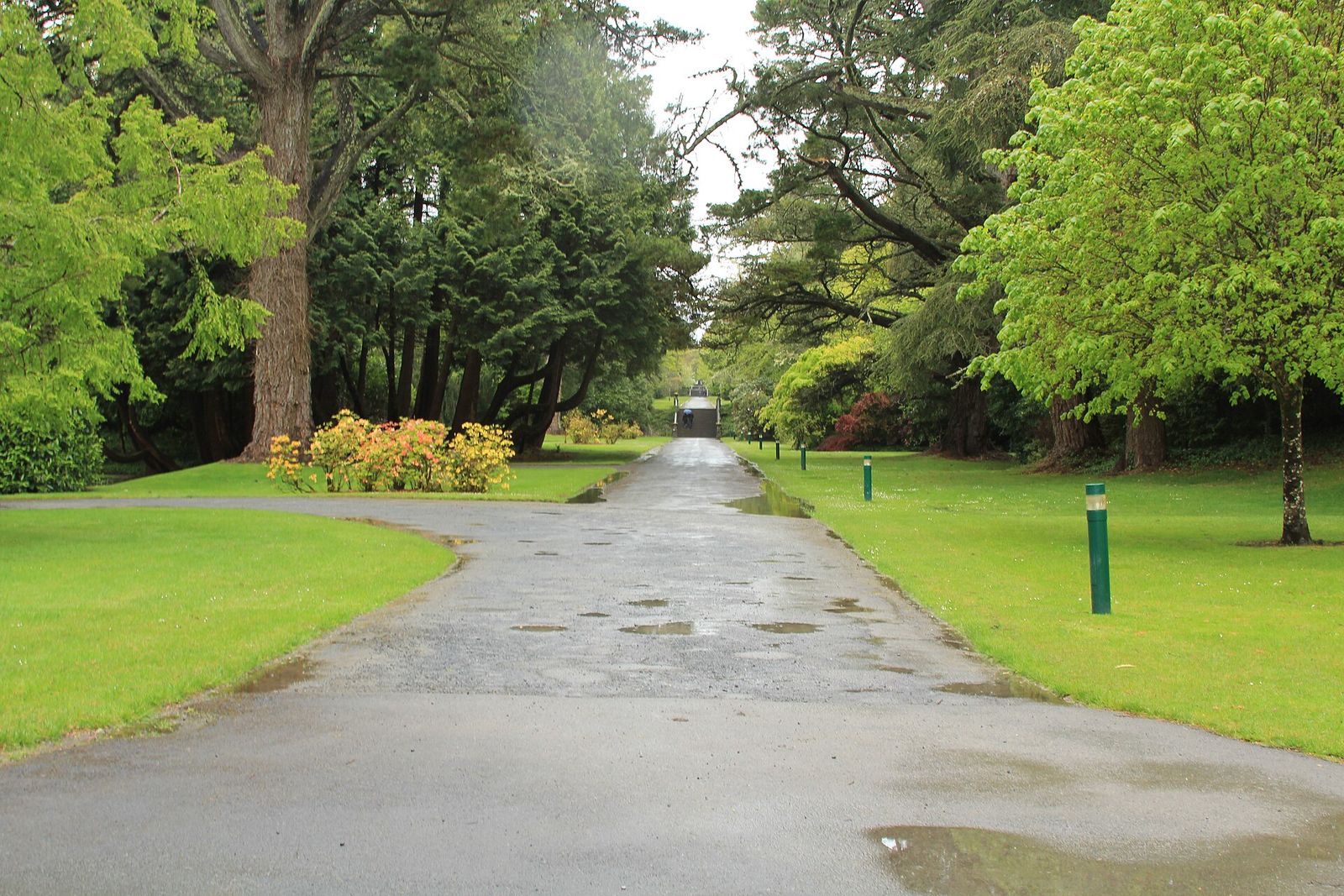
Set beside Lough Corrib near Cong, Ashford Castle combines a long Irish history with access to woodland, water and village life.
Read More
Historic Hotels · 6 min read
The Taj Mahal Palace and Mumbai's Waterfront
Mumbai, Maharashtra, India
Facing Mumbai Harbour near the Gateway of India, the Taj Mahal Palace is a landmark whose story is closely tied to the city's maritime edge.
Read More
Historic Hotels · 7 min read
Raffles Hotel: A Historic Address in Singapore
Singapore
Raffles Hotel links Singapore's colonial-era streetscape with the city's modern center, offering a historic landmark to explore from the outside in.
Read More