Design Hotel
Hotel Marqués de Riscal
Elciego, Spain
Updated · 6 min read
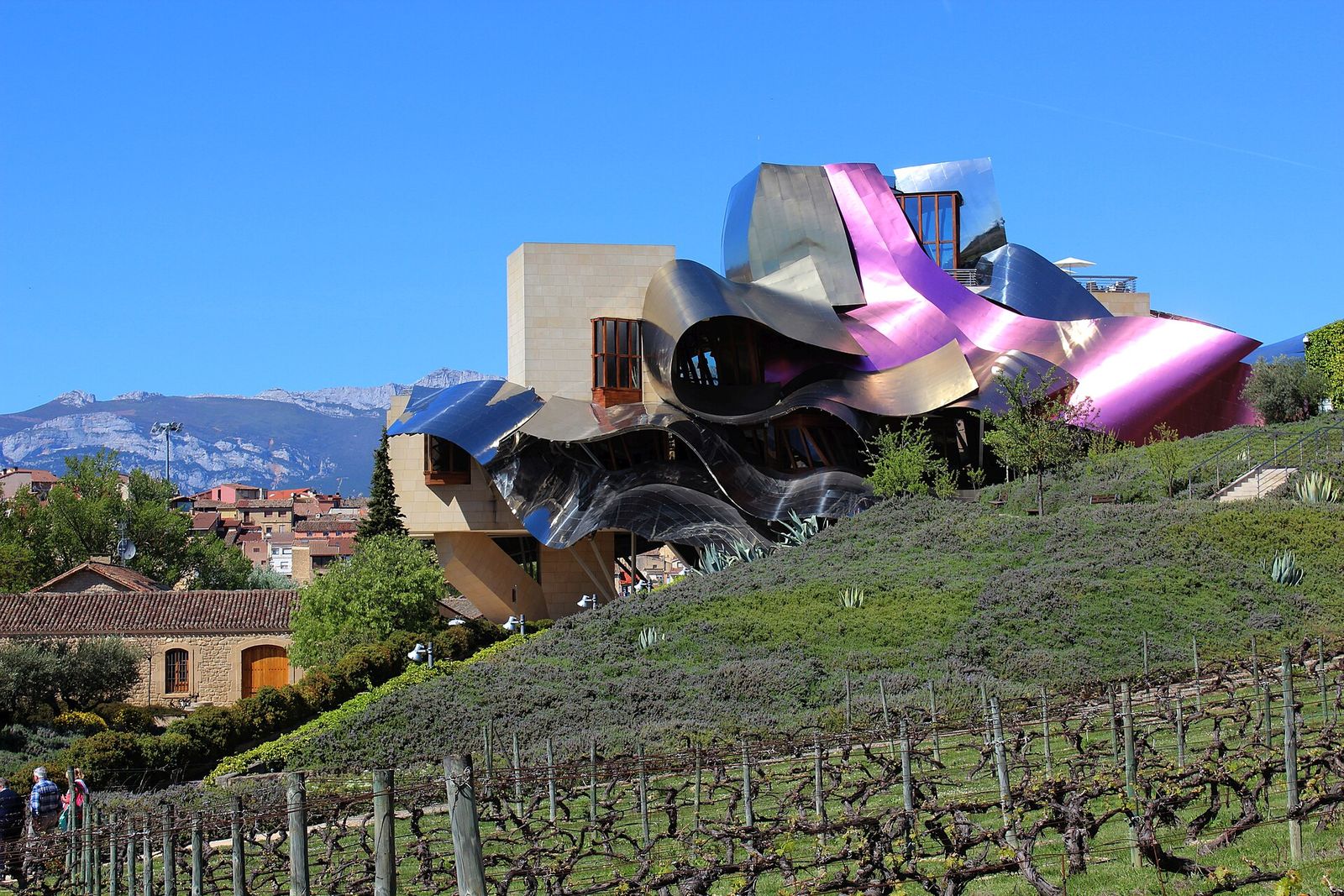
A hotel designed by Frank Gehry at one of Rioja's historic wineries, opened in 2006 among vineyards in the Basque province of Álava.
Architecture and atmosphere
Undulating ribbons of titanium in pink, gold and silver tones float above a sandstone structure.
The surroundings
Vineyards, the village of Elciego and the wider wine landscape of Rioja Alavesa.
A building that looks like spilled wine
From the road into Elciego, the first thing you see is colour: ribbons of pink, gold and silver metal curling above the vineyards. Up close, they reveal themselves as titanium and stainless steel panels, shaped into flowing canopies that wrap a solid core of sandstone. Frank Gehry, the Canadian American architect behind the Guggenheim Museum Bilbao, designed the building, which opened in 2006.
The colours are symbolic. Pink stands for red wine, gold for the fine gold wire mesh that has wrapped Marqués de Riscal bottles for over a century, and silver for the capsule on the bottle neck. The intention was to create a building that expresses the winery's identity in a direct and playful way.
Structure and materials
Underneath the metal, the hotel is a relatively compact building of sandstone blocks, in a colour that echoes the stone of the old winery and the town. Gehry wrapped this core in the curved metal panels, which create shade, frame views and give the building its extraordinary silhouette. The structure stands on columns, partly lifting it above the ground, and a footbridge connects it to a second wing containing more rooms and the spa.
Because of its shape, the building has very few straight lines. Interior walls angle and curve, windows are irregular and ceilings follow unexpected forms. This makes each room slightly different, and it can feel disorienting at first. Some guests love it. Others find it a little unsettling.
The winery behind the hotel
The Marqués de Riscal winery was founded in 1858 by Guillermo Hurtado de Amézaga, the Marquis of Riscal, after a period in Bordeaux. He brought French winemaking techniques to Rioja, especially the use of oak barrels for aging. The winery quickly became one of the leading producers in the region, and its historic stone buildings and cellars still stand next to the hotel.
The cellars contain a historic collection of bottles, sometimes called the "cathedral", with vintages going back to the 19th century. Guided tours show the old and new parts of the winery, explaining how wine is made and aged. Tastings usually follow. The hotel itself is part of a larger project, the City of Wine, which combines the hotel, restaurants, a spa and the winery in one complex.
Gehry's motivation
Gehry was initially reluctant to take on the project, according to accounts from the winery. He was eventually persuaded, and it is often told that a bottle of wine from his birth year, 1929, helped. Whatever the details, the commission came soon after the success of the Guggenheim Bilbao, and the winery hoped for a similar effect in Rioja.
Inside the hotel
The hotel is operated as part of Marriott's Luxury Collection. Rooms are contemporary, with furniture partly designed by Gehry, large windows and views of the vineyards, the old winery or the town of Elciego. The spa offers treatments based on vinotherapy, using grape extracts and other wine related ingredients. The restaurants focus on regional cuisine, with dishes designed to pair with wines from the estate and the wider region.
The rooftop terrace and some public areas offer the best views, with the rippling metal framing the church of Elciego, the vineyards and the Sierra de Cantabria in the distance. Access to some areas is reserved for hotel guests, while visitors on winery tours may see the building mainly from outside.
The setting: Elciego and Rioja Alavesa
Elciego is a small town in the Rioja Alavesa subzone, on the north bank of the Ebro in the Basque province of Álava. Its streets are lined with stone houses and old cellars, and its church, San Andrés, with two towers, dominates the skyline. The contrast between the traditional town and the shining hotel is the essence of the place.
Around Elciego, vineyards cover the slopes, protected from northern winds by the Sierra de Cantabria. Nearby towns include Laguardia, a walled medieval hill town, and Labastida. Logroño, capital of La Rioja, is about half an hour away, and Haro, the historic centre of the Rioja wine trade, about forty minutes.
Architecture among the vineyards
The Marqués de Riscal hotel is one of several striking buildings in the region. Bodegas Ysios, near Laguardia, has a wave shaped roof designed by Santiago Calatrava, while López de Heredia in Haro has a pavilion by Zaha Hadid. A visit to several wineries shows how architecture has become part of Rioja's identity.
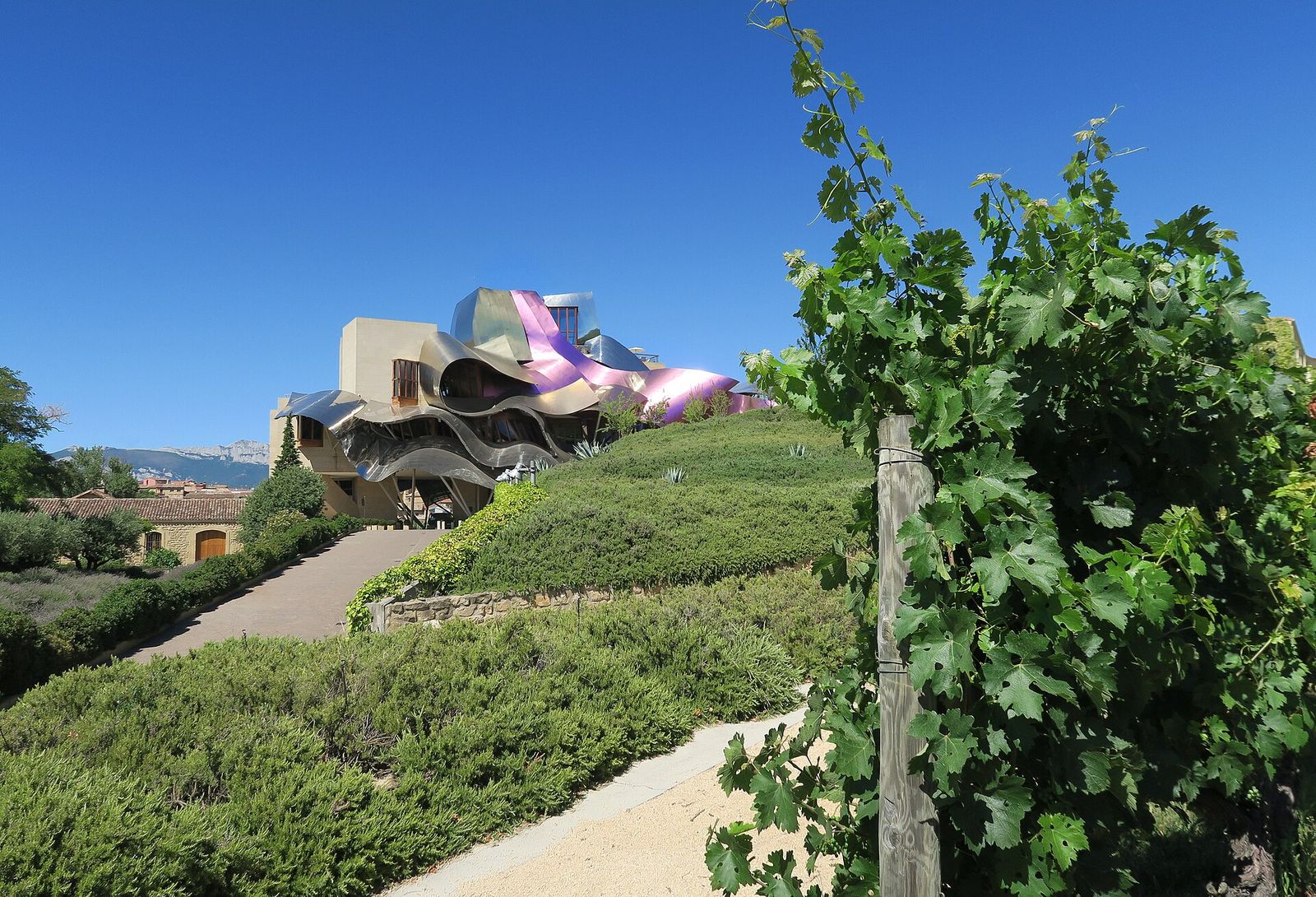
A different view from the vineyards
Most photographs show the hotel from close up, but some of the best views come from further away. Walk along the paths through the vineyards on the edge of Elciego, or drive up towards the hills of the Sierra de Cantabria, and the building appears as a flash of colour among rows of vines, with the town and church beside it. In late afternoon, the metal catches the warm light and glows. During the harvest, tractors and pickers move through the fields around it, and the smell of crushed grapes hangs in the air.
The town and the hotel
Elciego is a working wine town, not a resort. Many families have small cellars, and harvest is a busy time for everyone. The hotel's arrival brought visitors and attention, and the town has adapted, with a few more bars and restaurants than before. Still, its streets are quiet most of the year. Taking a walk through them, and perhaps stopping for a glass in a local bar, gives a sense of the place that the hotel alone cannot. The church square in particular offers a classic view of Gehry's roofs rising above the old houses, and its one of the best spots for photos in the evening.
Before you visit: what to check
Winery tours and tastings at Marqués de Riscal are popular and usually need to be reserved in advance, especially at weekends and during the harvest in September and October. Tours are offered in several languages. Check the current schedule on the official website. If you want to see the hotel interior, ask whether non guests can dine at the restaurants, as this is often the easiest way.
Remember that Rioja is wine country, and drinking and driving do not mix. Spain has strict limits on blood alcohol for drivers. Many visitors arrange taxis or guided tours for winery visits. Summers can be hot, winters cold, and spring and autumn are usually the most pleasant seasons.
Practical tips for visiting Hotel Marqués de Riscal
- Book a winery tour in advance, especially during harvest season.
- View the building from Elciego's streets and the church square for the classic contrast of old and new.
- Plan transport carefully if you visit several wineries, as tastings and driving dont mix.
- Bring a hat and sunglasses in summer, as the metal canopies and vineyards reflect strong light.
- Combine your visit with Laguardia's medieval streets and underground cellars.
- Ask about restaurant access if you want to see the interiors without staying overnight.
Questions travellers ask
Who designed Hotel Marqués de Riscal?
The hotel was designed by Frank Gehry, the architect of the Guggenheim Museum Bilbao, and opened in 2006.
What do the colours of the hotel represent?
Pink represents red wine, gold the mesh on Marqués de Riscal bottles, and silver the bottle's capsule.
Can I visit the winery without staying at the hotel?
Yes. Winery tours and tastings are generally open to visitors and should be booked in advance through official channels.