Design Hotel
Fogo Island Inn
Fogo Island, Newfoundland, Canada
Updated · 6 min read
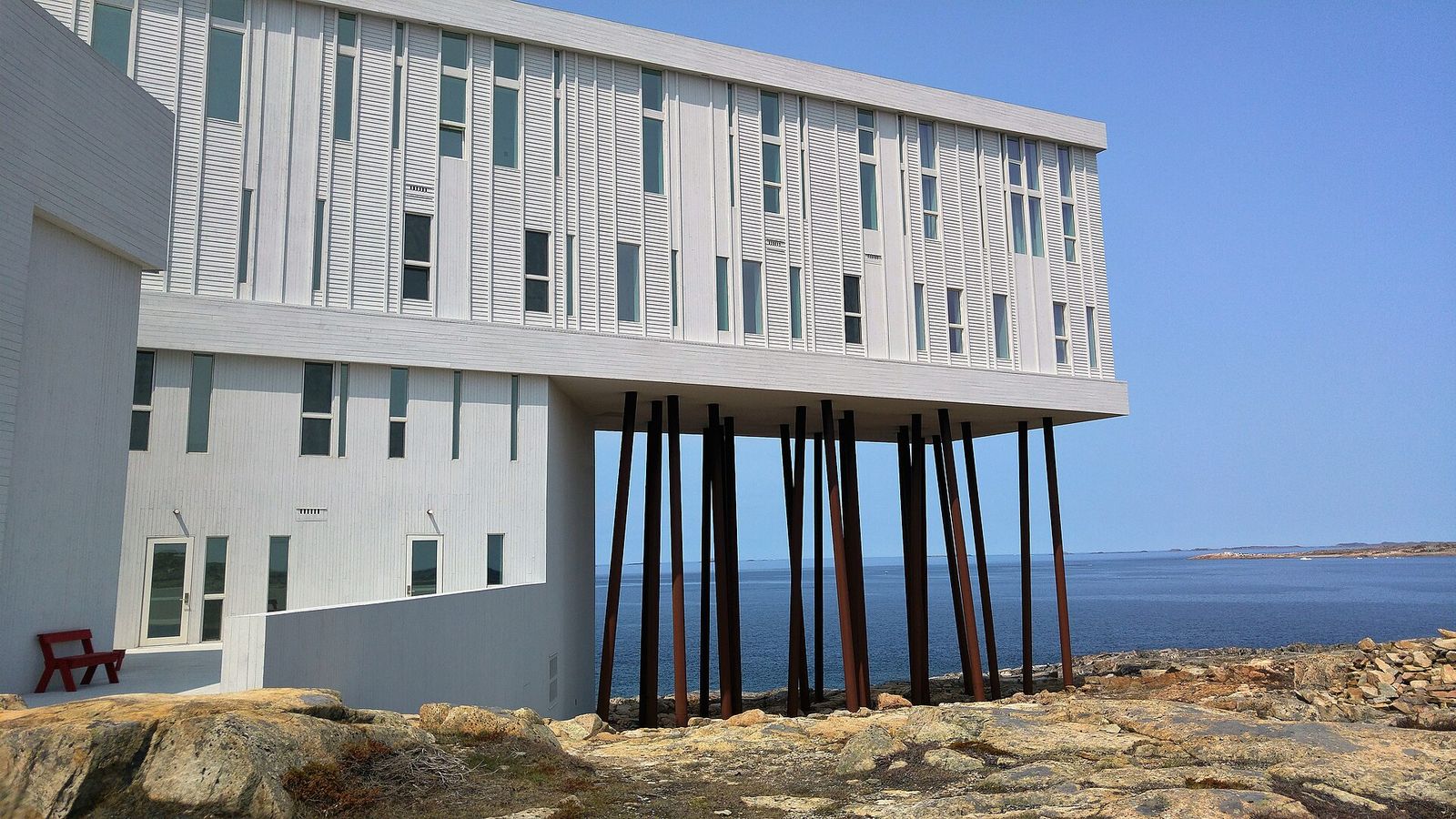
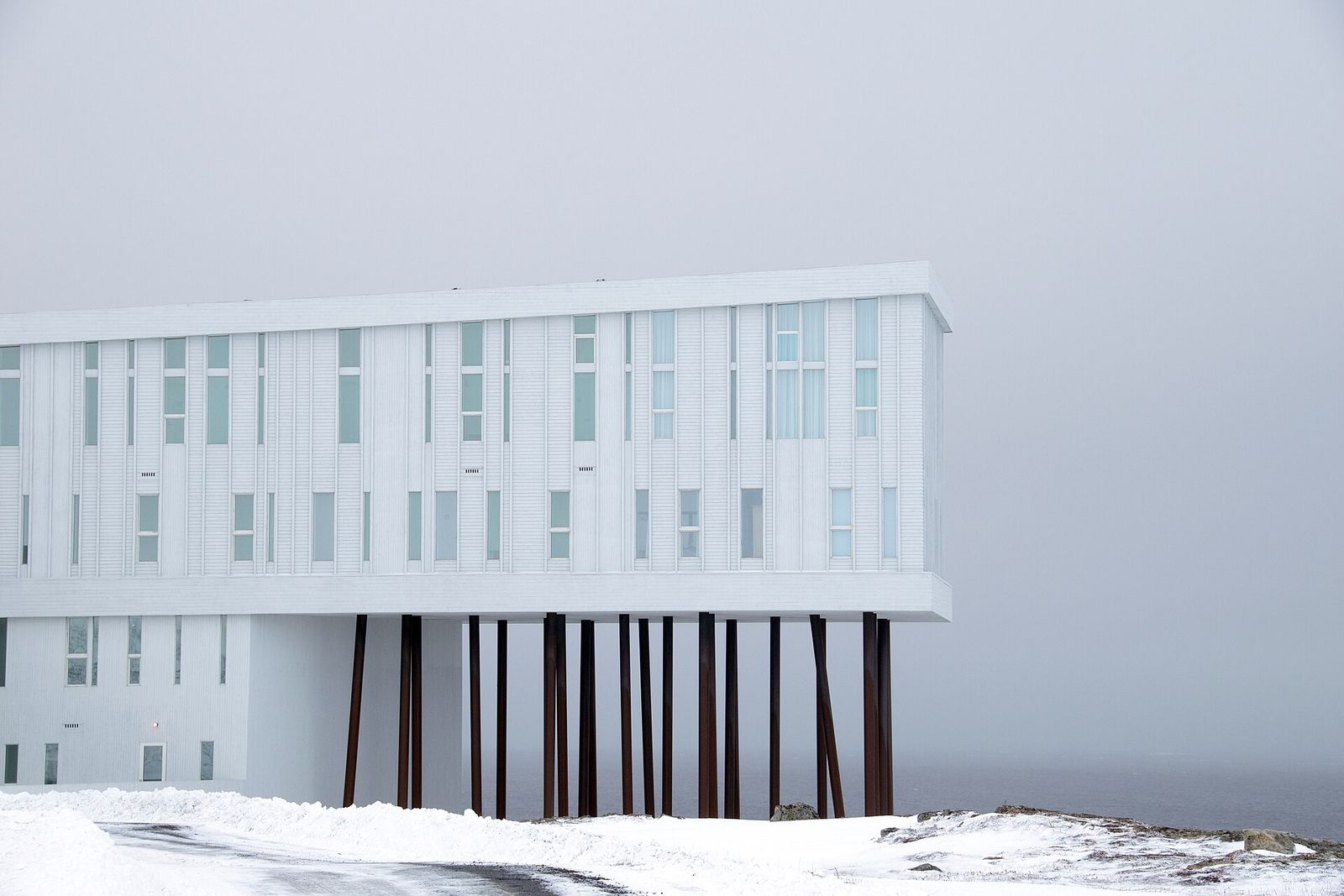
A contemporary inn on stilts at the edge of the North Atlantic, designed by architect Todd Saunders and created to support the island's community.
Architecture and atmosphere
A cross-shaped timber building raised on slender supports, drawing on the island's traditional fishing stages.
The surroundings
Rocky shoreline, small outport communities and open ocean views on all sides.
A building on stilts
Fogo Island Inn sits on the rocky shore of Joe Batt's Arm, on the north side of Fogo Island, facing the open North Atlantic. The building rests on slender columns, so that much of it floats above the rocks. This is not just an architectural gesture. It refers directly to the fishing stages and sheds of Newfoundland's outports, traditionally built on wooden stilts over the water so that boats could unload fish directly.
The architect, Todd Saunders, grew up in Gander, Newfoundland, and later established his practice in Bergen, Norway. He designed the inn as a long, cross shaped building with four storeys, clad in local spruce boards painted white, with large windows facing the sea. The building's shape allows every guest room to have a view of the ocean, and the stilts help reduce disturbance to the landscape below.
Built for a community
The inn opened in 2013. It was developed by Shorefast, a registered Canadian charity founded by Zita Cobb and her brothers Alan and Anthony. Zita Cobb grew up on Fogo Island, left to study and work, and returned after a career in the fibre optics industry. The charity's goal is to strengthen the island's economy and culture after the collapse of the cod fishery, which led to the 1992 moratorium on northern cod fishing.
The inn is owned by Shorefast, and the organisation describes it as a social business. Surpluses from its operation are reinvested into community projects on the island. Many staff are islanders, and local suppliers are used wherever possible. This model is central to understanding the inn. It is not just a hotel with a view. It is a tool for keeping a community alive.
The economic nutrition label
The inn has been known for publishing an "economic nutrition" breakdown, showing where the money spent by guests goes, for example to labour, food, operations and community investment. It is an unusual approach in the hotel world, and it reflects the idea that visitors should be able to see how their stay affects the place they visit.
Inside the inn
Inside, the inn has 29 guest rooms and suites, each with floor to ceiling windows facing the sea. The interiors combine contemporary design with traditional crafts. Quilts are handmade by local quilters, many using patterns passed down through families. Furniture, lamps and textiles have been produced through Fogo Island Workshops, a Shorefast project that pairs international designers with local builders and makers. Pieces like the Punt Chair, inspired by the small wooden boats used for fishing, appear throughout the building.
Public spaces include a dining room, a library, an art gallery, a cinema and a rooftop area with saunas and hot tubs facing the ocean. Wood stoves add warmth in colder months. The atmosphere is calm and intimate, with large windows framing the changing light and weather.
Food from the island
The kitchen focuses on local ingredients, from cod and other seafood to wild game, foraged plants and berries. Menus change with the island's seasons. Traditional Newfoundland dishes and preserving techniques are part of the approach, alongside contemporary cooking. Guests often find that meals become a way of understanding the island's relationship with the sea and the land. Dietary requirements are usually best discussed before arrival, since the island is remote and supplies arrive by ferry.
The art studios
Fogo Island Arts, another Shorefast programme, runs artist residencies on the island. Saunders also designed a series of small studios placed in remote spots around the island: Long Studio, Squish Studio, Bridge Studio, Tower Studio and others. Each has its own sculptural form, raised on posts or anchored to rocks. They are working spaces for artists and are not hotels or public galleries, but you can see some of them from walking trails. The inn's gallery shows contemporary art, often by artists in residence.
The setting: Joe Batt's Arm and Fogo Island
Joe Batt's Arm is one of about ten communities on Fogo Island. Its harbour, wharves, fishing stages and saltbox houses are typical of Newfoundland outports. The surrounding landscape is rugged and treeless in many places, with low hills, ponds and rocky shoreline shaped by glaciers. Walking trails lead along the coast, through berry fields and over headlands.
Other communities include Tilting, a provincial historic district with strong Irish heritage, and Fogo, with Brimstone Head, a rocky outcrop with wide views. The island is about 25 kilometres long and has a population of a little over two thousand people. Life follows the seasons, and the inn describes seven seasons in total, including pack ice, trap berth and berry season.
Architecture that belongs to its place
Saunders has described his approach as modern architecture that grows from local traditions rather than copying them. The inn's materials and forms reflect this. The white painted wood recalls the clapboard houses of the island. The stilts echo fishing stages. Inside, the use of local wood, crafts and textiles connects the building to the people who made them. At the same time, the long shape and large windows are clearly contemporary.
The result has been widely published and discussed, and the inn has become a reference for projects that try to combine architecture, tourism and community development. For visitors, the effect is simple: the building frames the landscape and the weather so that you notice them more, not less. On a stormy day, rain sweeps across the windows and waves break on the rocks below. On a calm summer evening, the sea turns silver and the light lingers for hours. Either way the ocean is the main event, and the building knows its role.
Before you visit: what to check
Fogo Island is reached by car ferry from Farewell, on the north coast of Newfoundland, with crossings of around 45 minutes, sometimes longer depending on route and stops. Ferries can be delayed or cancelled by weather or heavy ice, especially in winter and spring. The nearest airport is Gander, about an hour and a half by road from Farewell. Check current ferry schedules and whether transfers are included with your stay.
The inn may close for part of the year, and some activities depend on season and weather. Check the official website for opening dates and what is included. Mobile coverage can be patchy in places on the island, so download maps in advance. Weather changes quickly, and fog is common, so pack warm layers in any month.
Practical tips for visiting Fogo Island Inn
- Check ferry schedules from Farewell and allow extra time for weather delays.
- Pack windproof and waterproof clothing, even in summer.
- Ask about community host experiences, which introduce guests to island life.
- Walk at least one coastal trail, such as the routes around Joe Batt's Arm or Tilting.
- Respect private property, especially around fishing stages and homes.
- Leave time to rest. Watching weather roll in through the windows is part of the experiance.
Questions travellers ask
Who designed Fogo Island Inn?
The inn was designed by Todd Saunders, a Newfoundland born architect based in Bergen, Norway.
Why is Fogo Island Inn built on stilts?
The stilts echo traditional Newfoundland fishing stages and help the building sit lightly on the rocky shoreline.
How does the inn support the local community?
The inn is owned by the charity Shorefast, which reinvests surpluses into community projects on Fogo Island.