Landmark Hotel
Fairmont Le Château Frontenac
Québec City, Canada
Updated · 6 min read
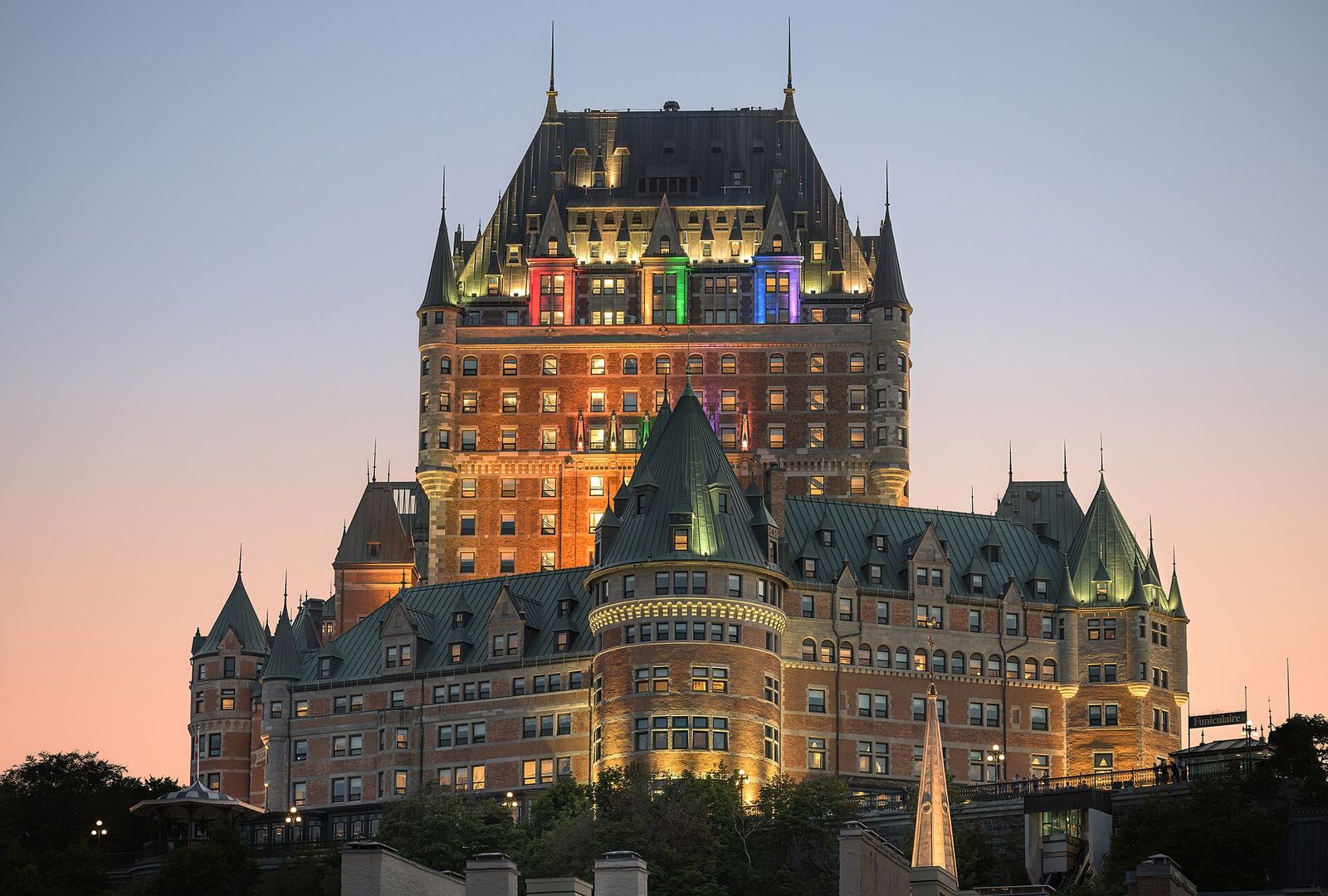
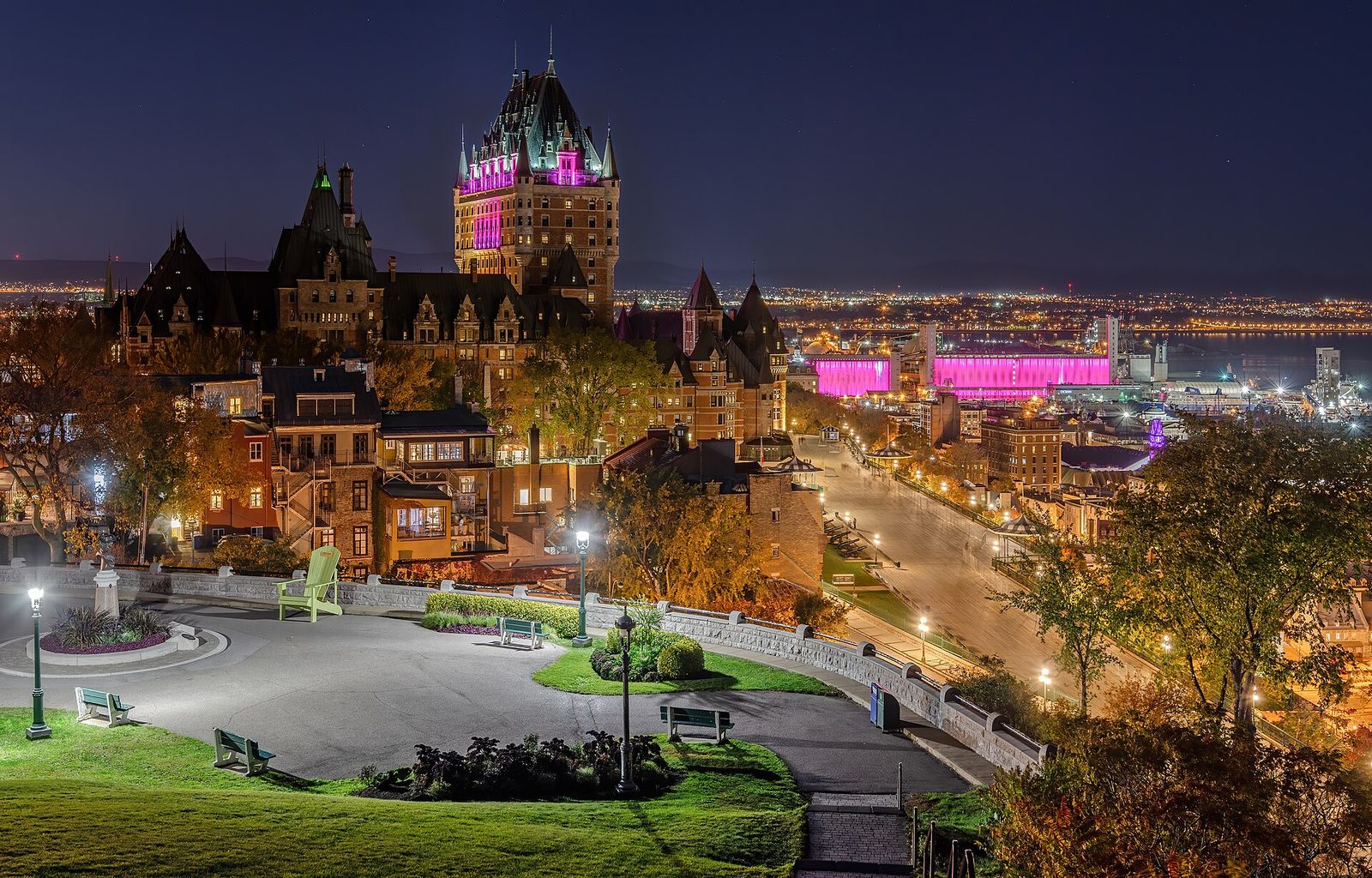
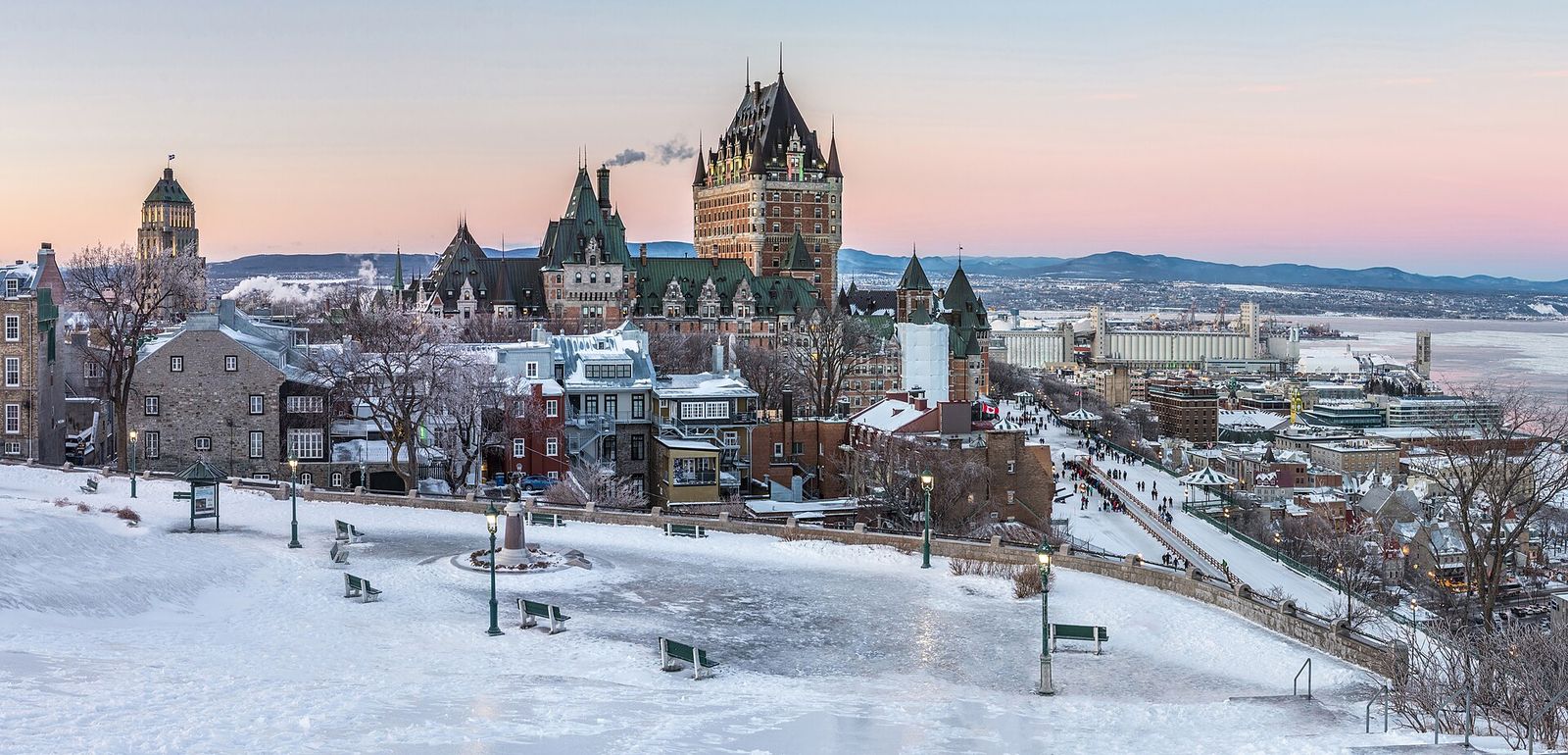
Opened in 1893 by the Canadian Pacific Railway, the château-style hotel crowns Old Québec, itself a UNESCO World Heritage Site.
Architecture and atmosphere
Copper roofs, turrets and brick walls in the Châteauesque style that became a signature of Canada's railway hotels.
The surroundings
The Dufferin Terrace boardwalk and the St. Lawrence River lie directly below the hotel.
A railway hotel on a cliff
Château Frontenac was built by the Canadian Pacific Railway, which in the late 19th century was busy creating a chain of grand hotels across Canada to attract travellers to its trains and ships. The company's general manager, William Cornelius Van Horne, is often credited with the idea that if Canada could not export its scenery, it should import tourists. Québec City, with its old walls and French heritage, was a natural choice.
The hotel opened in December 1893, on the site of the former Château Haldimand, the residence of British colonial governors, and close to the ruins of the earlier Château Saint Louis. It was named after Louis de Buade, Comte de Frontenac, governor of New France in the late 17th century. From the beginning, the hotel was designed to dominate the city's skyline from the river, and it still does.
The Châteauesque style
The architect was Bruce Price, an American who also designed Windsor Station in Montréal for the same company. Price drew on the Renaissance châteaux of the Loire Valley in France, with their steep roofs, turrets, dormer windows and towers. The style, later called Châteauesque, suited Québec perfectly, as it recalled French architecture and gave the building a romantic, castle like presence.
The walls are built of brick and stone, while the roofs are covered in copper, which has weathered over the years to the green patina that makes the building so recognisable. Look for the turrets on the corners, the carved stone details around windows and the tall chimneys. The building has a slightly irregular plan, partly because it grew in stages.
Growth over decades
The original 1893 building was relatively small. Wings were added in the 1890s and early 1900s, and the most important addition came in the 1920s, when the central tower was built, designed by the brothers Edward and William Sutherland Maxwell. This tower, around 80 metres high, gave the hotel its definitive silhouette. Later wings and renovations followed, including a major restoration and modernisation in the 2010s.
History inside the walls
The hotel's most famous historical moment came during the Second World War. In August 1943, and again in September 1944, Château Frontenac and the nearby Citadelle hosted the Québec Conferences, where Winston Churchill, Franklin D. Roosevelt and the Canadian prime minister William Lyon Mackenzie King met to discuss Allied strategy, including planning for the invasion of Normandy. The hotel was closed to the public during the conferences.
Many other well known guests have stayed over the years, but the building's significance is broader than any single visit. In 1980 it was designated a National Historic Site of Canada, recognising it as one of the most important examples of the grand railway hotels.
Interiors
Inside, the hotel mixes historic and contemporary elements. Lobbies and corridors have wood panelling, chandeliers and decorative ceilings, while rooms have been renovated in various styles. Many rooms have views over the St. Lawrence River or the old town. Under the hotel and the terrace, archaeological remains of the earlier Château Saint Louis and its forts have been excavated and can be visited through a site run by Parks Canada.
Food and the hotel's own traditions
The hotel has several restaurants and bars, ranging from formal dining to a more relaxed bistro, and their menus usually lean on Québec ingredients: lake and river fish, game, cheeses from the province, maple and local berries. For many visitors, a drink in the bar with a view over the river is the easiest way to spend an hour in the building without staying overnight.
The Château also has its own small traditions. It has kept beehives on the roof in summer, producing honey used in the hotel's kitchens, and it has a resident dog that greets guests in the lobby, a role that has passed between several dogs over the years. These are small things, but they give the building a homely side that contrasts with its grand silhouette.
The building in winter
Snow changes the hotel completely. With frost on the copper and snow on the turrets, Château Frontenac looks like the setting of a fairy tale, and the terrace becomes a winter playground. Inside, fires and warm lighting make the public rooms feel cosy. The building was designed with Québec's long winters in mind, with thick walls and heavy windows, and walking in from minus twenty to the warm lobby is a very particular pleasure. If you visit at this time, bring proper winter clothing and footwear, because getting around Old Québec involves a lot of walking on slippery slopes and stairs, and the wind off the river can be fierce.
Some rooms are on the small side, as is common in historic hotels, so its worth reading room descriptions closely if space matters to you.
The setting: Upper Town and the river
The hotel stands at the top of Cap Diamant, the cliff above the St. Lawrence, within Old Québec, a UNESCO World Heritage Site since 1985. In front lies Dufferin Terrace, a long wooden boardwalk with wide views over the river to Lévis and Île d'Orléans. In winter, a traditional toboggan slide runs on the terrace. Next to the hotel, Place d'Armes, the old parade ground, is surrounded by historic buildings and leads into the narrow streets of the Upper Town.
The Lower Town, with Petit Champlain and Place Royale, lies directly below, reached by the funicular or by steep stairways. The Citadelle and the Plains of Abraham are a short walk along the terrace and the Governors' Promenade.
Before you visit: what to check
Château Frontenac is a working hotel, operated by Fairmont. Lobbies, shops and restaurants are generally open to visitors, but guest floors are private. Guided tours of the hotel have often been offered, run by guides in historical costume, telling the story of the building and its famous guests. Schedules and formats change, so check before you go if you want to join one.
Québec City has strong seasons. Winter is long and cold, with temperatures often well below freezing and heavy snow. The Québec Winter Carnival in late January and February brings large crowds. Summer is warm and busy, with festivals and cruise ship visitors. Autumn is beautiful, with colours in the surrounding countryside. Old Québec is hilly, and streets and stairs can be icy in winter.
Practical tips for visiting Château Frontenac
- Look at the hotel from the river first, on the Québec Lévis ferry, for the classic view.
- Check current tour schedules if you want a guided visit of the building.
- Visit the archaeological site beneath Dufferin Terrace to see what stood here before the hotel.
- Wear boots with good grip in winter. The terrace and nearby stairs get icy.
- Come back after dark, when the facade is lit and the terrace is quieter.
- Use the funicular to reach the Lower Town if the stairs look daunting, its worth the small fare.
Questions travellers ask
Who designed Château Frontenac?
The original building was designed by the American architect Bruce Price. The central tower was added in the 1920s by Edward and William Sutherland Maxwell.
What happened at Château Frontenac during the Second World War?
In 1943 and 1944 the hotel and the Citadelle hosted the Québec Conferences, attended by Churchill, Roosevelt and Mackenzie King.
Can I see the ruins under Dufferin Terrace?
Yes. Parks Canada runs an archaeological site showing remains of the Château Saint Louis and its forts, usually open in the warmer months. Check current dates.