Historic Hotel
Raffles Hotel
Singapore
Updated · 6 min read
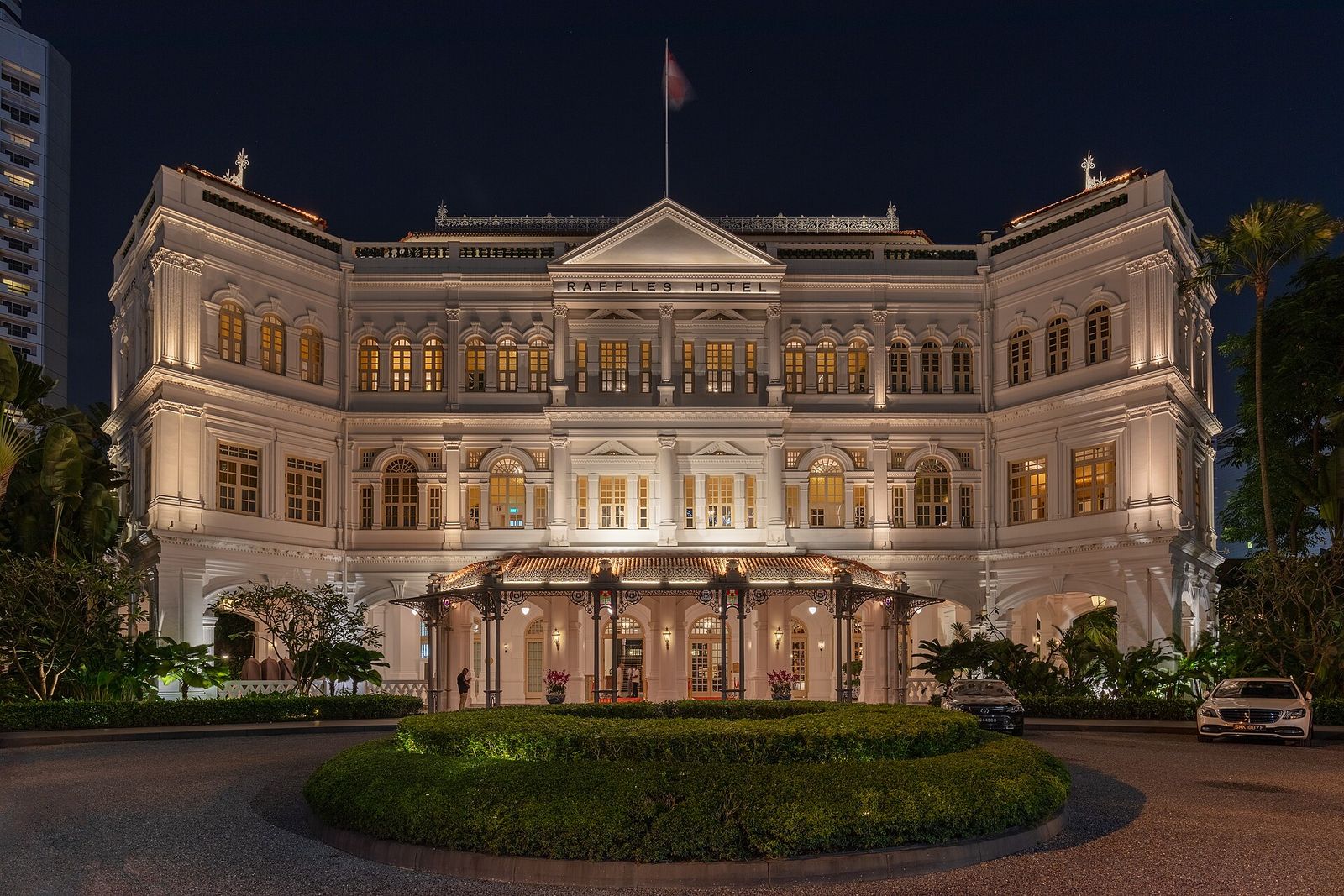
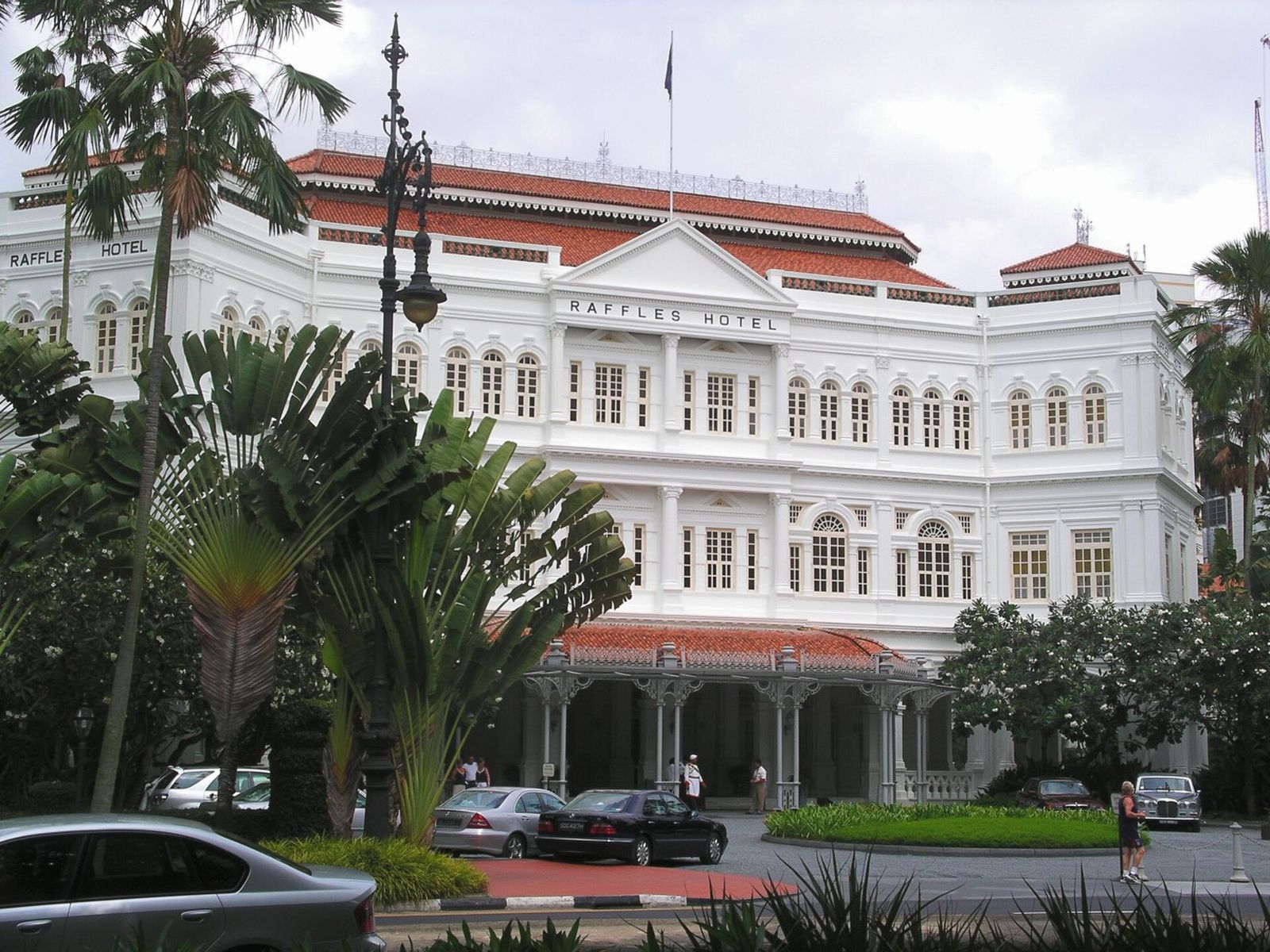
Founded in 1887 and named after Sir Stamford Raffles, this colonial-era hotel is a designated national monument and an enduring symbol of old Singapore.
Architecture and atmosphere
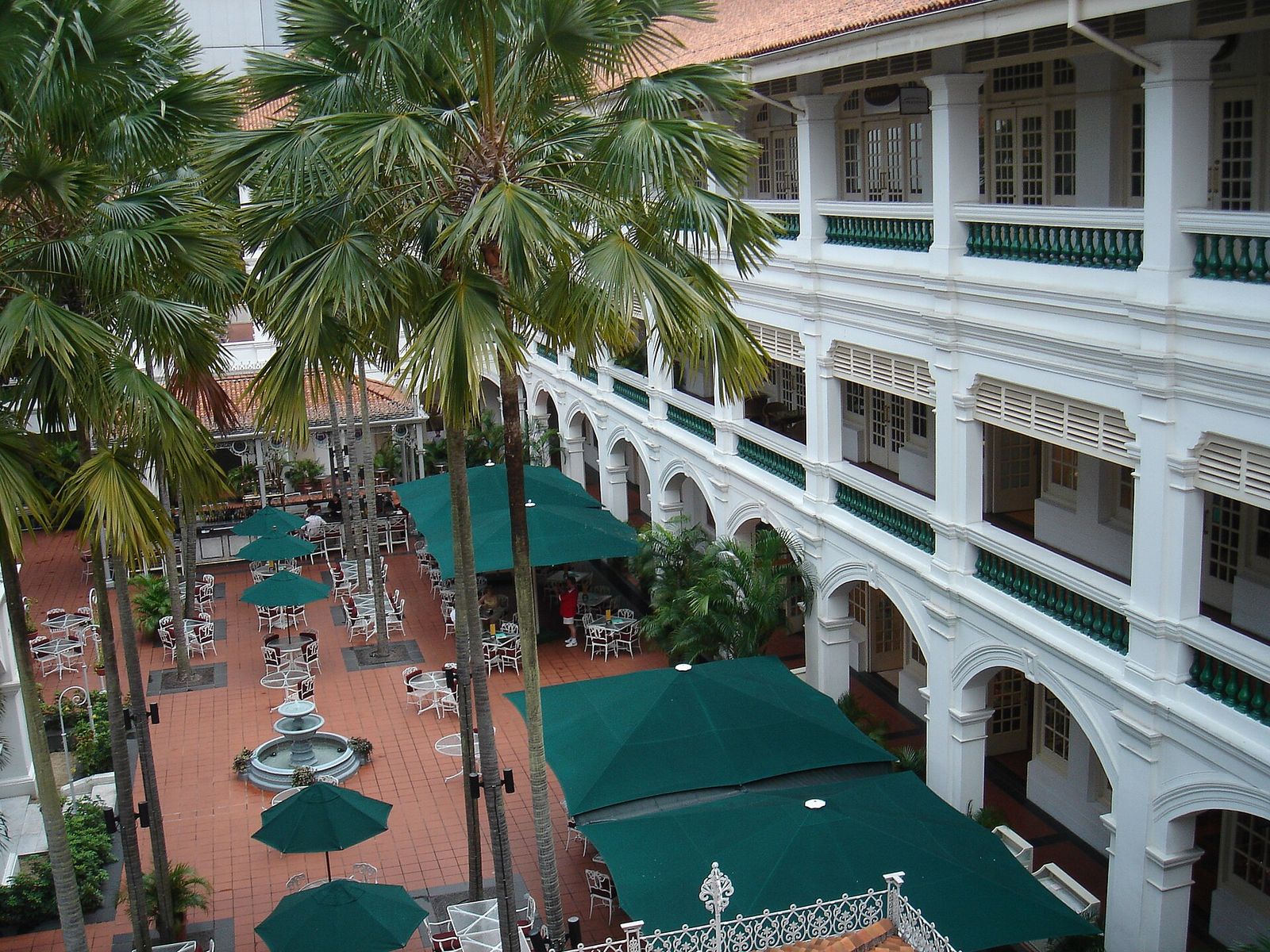
White facades, verandas and shaded courtyards in a neo-Renaissance style suited to the tropical climate.
The surroundings
Located on Beach Road in the civic district, within walking distance of museums, the Padang and Marina Bay.
From bungalow to national monument
Raffles Hotel began in 1887 as a modest bungalow on Beach Road, opened by the Sarkies brothers, Armenian hoteliers who also founded the Eastern and Oriental Hotel in Penang and the Strand in Yangon. They named it after Sir Stamford Raffles, the British official linked with the founding of modern Singapore in 1819. The early hotel had only a handful of rooms. Its position facing the sea, before land reclamation pushed the coast far away, was a large part of its appeal.
The hotel expanded quickly. A new main building, designed by the architect Regent Alfred John Bidwell of the firm Swan and Maclaren, opened in 1899. It introduced features that were novel at the time, including electric lighting and ceiling fans. Over the following decades more wings were added, as well as a ballroom, verandas and courtyards.
Changing fortunes
Raffles had difficult periods. During the Second World War, Singapore was occupied by Japan from 1942 to 1945, and the hotel was used by Japanese officers. After the war, it served for a time as a transit camp for released prisoners of war before returning to hotel use. By the second half of the 20th century, the building was showing its age. In 1987 the Singapore government declared it a national monument, and the hotel closed for a major restoration that lasted until 1991. A second large restoration followed between 2017 and 2019.
Architecture for the tropics
The main building is often described as neo Renaissance, with a symmetrical white facade, arched windows, columns and a central portico. But what makes it work in Singapore's climate are the features designed for heat and rain: deep verandas that shade the rooms, high ceilings, louvred shutters, wide corridors that allow air to move and courtyards planted with palms and frangipani.
Walking the verandas, you notice how much shade matters. The building is arranged around open spaces rather than closed blocks, so light and air reach rooms from more than one side. Even in an age of air conditioning, these spaces feel cool and calm.
Suites rather than rooms
After the restorations, Raffles became an all suite hotel. Suites are arranged along the verandas, many with a small sitting area and direct access to the shaded walkways. The interiors mix period furniture, polished wood, high ceilings and modern bathrooms. Some suites are named after famous guests. Not all parts of the building are open to the public, and the residential wings are reserved for guests.
The Long Bar and other spaces
The Long Bar is one of the most visited spaces in the hotel, and it has been moved within the complex over time. It is where the Singapore Sling is said to have been created in the early 20th century by the bartender Ngiam Tong Boon. Today the bar has a plantation style interior with fans shaped like palm leaves, and guests are encouraged to drop peanut shells on the floor, a tradition that surprises many first time visitors in tidy Singapore.
Other spaces include the Grand Lobby, used for afternoon tea, the Writers Bar, which recalls authors linked to the hotel's history, and a number of restaurants. A shopping arcade and a small display of historic objects have also been part of the complex.
The setting: Beach Road and the civic district
Raffles stands in the heart of the civic district, the area where much of colonial Singapore's administration and culture was concentrated. Across Bras Basah Road lies CHIJMES, a former Catholic convent and school now used for restaurants and events. The National Gallery Singapore, housed in the former Supreme Court and City Hall, is a short walk away. The Padang, the large open field used for sport and ceremonies, sits in front of these buildings, and beyond it lies the Esplanade and Marina Bay.
This location makes Raffles convenient for walking. Within fifteen or twenty minutes you can reach museums, parks, the Singapore River and the modern waterfront. The MRT stations at City Hall and Esplanade are close by.
Old and new side by side
One of the striking things about Raffles today is the contrast with its surroundings. Glass towers rise behind the low white building, and the hotel's gardens feel like a refuge in the middle of the city. Singapore has protected several historic buildings in the area, but many others were replaced during rapid development in the late 20th century. Raffles survived, and that survival is part of its significance.
Raffles and its writers
Raffles has long been associated with writers and travellers. Rudyard Kipling, Joseph Conrad and Somerset Maugham are among the names most often linked to the hotel, and Maugham in particular is said to have written at Raffles during his visits to Southeast Asia. Some of these stories have grown over time, as they tend to do with famous hotels, so treat the more colourful anecdotes with a little caution. The Writers Bar near the lobby commemorates this literary history, and its a pleasant, quiet place to stop for a drink away from the crowds at the Long Bar.
The restorations in practice
The 1989 to 1991 restoration aimed to bring the hotel back to its appearance around 1915, which was considered its high point. Later additions were removed, and the building was carefully repaired, with new wings added behind to house shops and facilities. The 2017 to 2019 work refreshed suites, restaurants and the lobby, while keeping the white facades and verandas untouched as possible. Seen from Beach Road, the hotel looks much as it did a century ago, even if almost everything inside has been renewed.
Before you visit: what to check
Raffles is a working luxury hotel, and access for non guests is limited to certain areas. In recent years, the lobby and some spaces have been reserved for hotel guests and diners with reservations. The Long Bar, shops and some restaurants are generally open to visitors. Check the hotel's current policy before you go, especially if you plan to visit only to look around.
A dress code applies in some areas, often smart casual,. Singapore's climate is hot and humid year round, with frequent tropical rain, so light clothes and an umbrella are useful. The Long Bar can have long queues at busy times, particularly in the afternoon and evening.
Practical tips for visiting Raffles Hotel
- Check which areas are open to non residents before you go, as access rules have changed over time.
- Visit the Long Bar early in the day or on a weekday to avoid the longest queues.
- Book afternoon tea in advance if you want to experience the Grand Lobby.
- Dress smart casual. Avoid flip flops and sportswear in restaurants and bars.
- Walk the civic district before or after your visit, the museums and the Padang are close by.
- Use the MRT to City Hall or Esplanade rather than a taxi at rush hour.
Questions travellers ask
When did Raffles Hotel open?
Raffles opened in 1887 as a small bungalow hotel run by the Sarkies brothers. The main building opened in 1899.
Is Raffles Hotel a national monument?
Yes. It was declared a national monument of Singapore in 1987.
Can I visit Raffles Hotel without staying there?
Some areas, such as the Long Bar and certain restaurants and shops, are generally open to visitors, while other parts are reserved for guests. Check the official website for current rules.