Design Hotel
7132 Hotel and Therme Vals
Vals, Switzerland
Updated · 6 min read
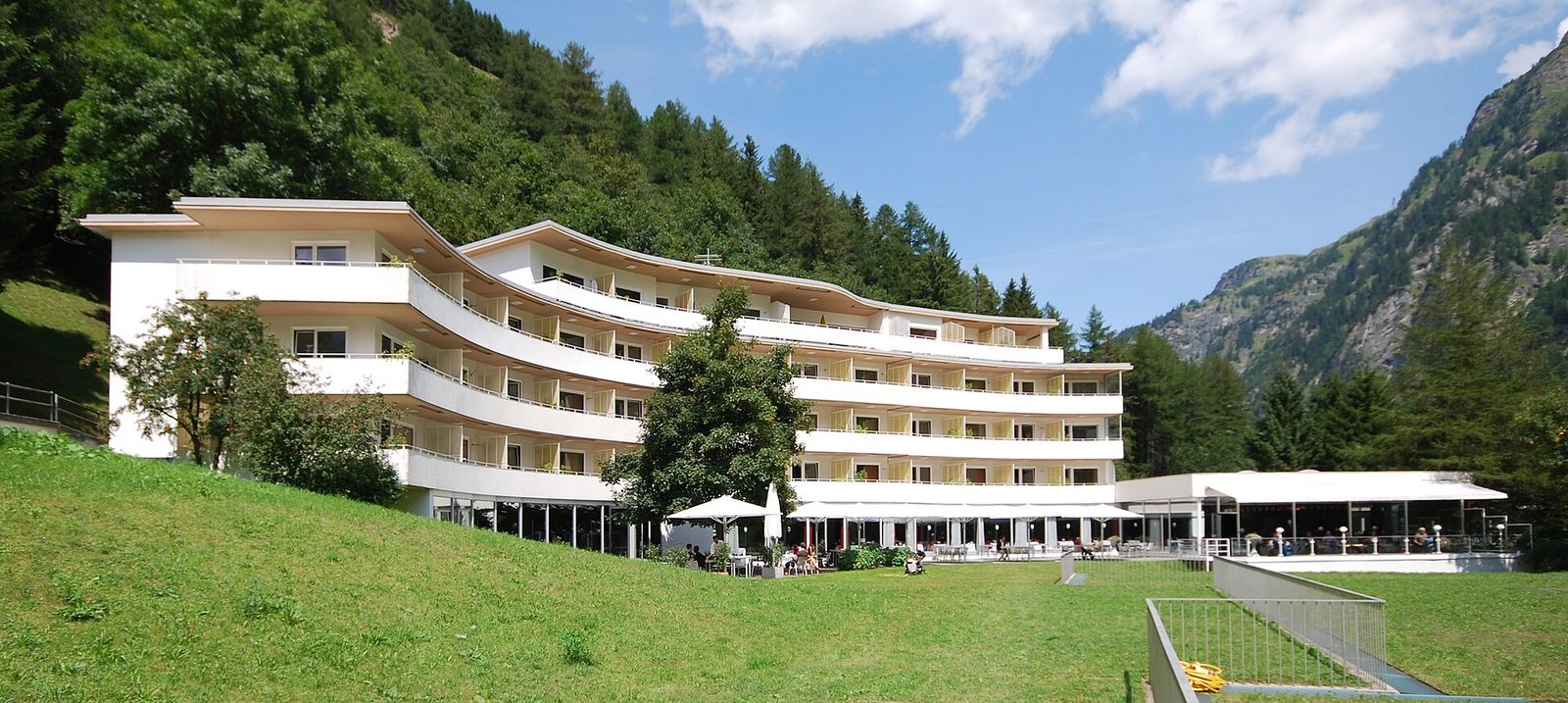
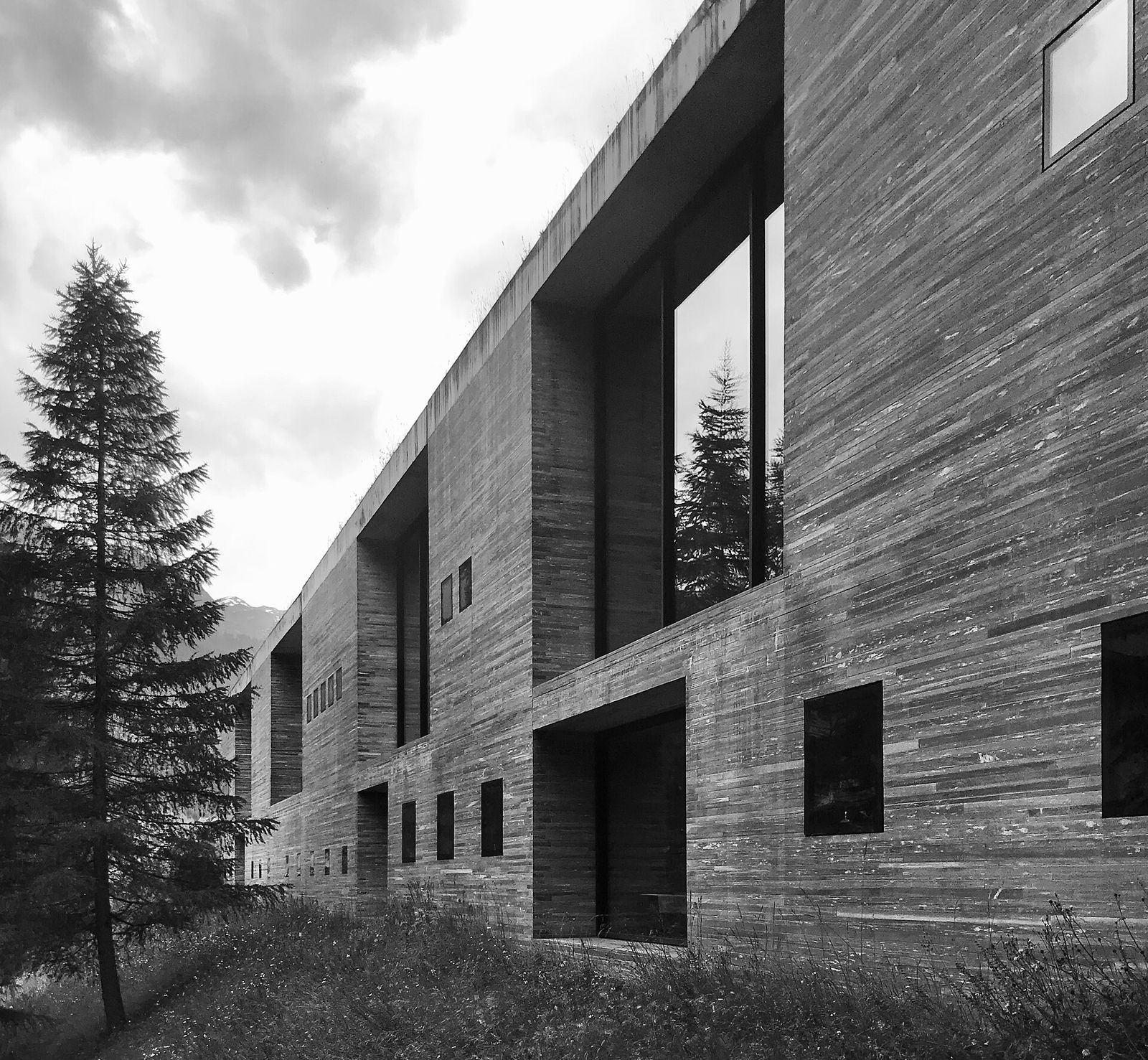
A hotel built around Peter Zumthor's celebrated thermal baths, completed in 1996 in a remote valley of Graubünden.
Architecture and atmosphere
The baths are built from layered local Valser quartzite, using light, shadow and water as part of the design.
The surroundings
A steep alpine valley with meadows, mountain villages and natural thermal springs.
A bath that looks like a quarry
Peter Zumthor once described his aim for Therme Vals as creating a building that looked as if it had always been there, older than the hotel around it. Walking towards it, you see a low rectangular form set into the slope, its grass roof continuous with the meadow above. Only the long walls of grey stone and a few deep openings reveal that it is a building at all.
The bath opened in 1996, after the village community bought the existing hotel complex and decided to build a new thermal bath. Zumthor, then much less famous than he is today, was based in nearby Haldenstein. He spent years refining the design, and the result became one of the most influential buildings of the late 20th century. In 1998, only two years after opening, it was placed under heritage protection.
Stone in thin layers
The main material is Valser quartzite, a grey green gneiss quarried in the valley. Zumthor's team used it in thin slabs of varying heights, stacked in horizontal layers with very fine joints. The pattern recalls geological strata and gives the walls a rhythm that changes with light. The slabs were cut to a few standard heights so that each course adds up to a regular module. Large blocks, or "stone tables", contain smaller rooms such as the hot bath, cold bath and changing areas, while the spaces between them form the main pools and corridors.
The roof is made of separate concrete slabs, each resting on its own stone block. Between them run narrow gaps filled with glass, which let light fall in thin lines across the water and walls. As the sun moves, these lines move, so the interior constantly changes during the day.
Water at different temperatures
The thermal spring of Vals rises at around 30 degrees Celsius. Inside the bath, water is used at different temperatures to create contrast. The main indoor pool is warm, the fire bath much hotter, and the cold bath very cold. There is a flower bath, scented with petals, a drinking stone where spring water can be tasted, and a sounding stone, a small chamber where humming creates strange echoes. The outdoor pool looks out across the valley towards the mountains, and in winter it is surrounded by snow.
The experience is about movement and pause. There are no signs telling you where to go. Visitors drift between spaces, discovering corners, doorways and small rooms. The building rewards patience and quietness. Many visitors say they lost track of time inside. Sessions in the bath are sometimes limited in length, so it helps to arrive without a tight schedule and simply let the building set the pace for a couple of hours.
The hotel around the bath
The hotel complex at Vals predates the bath. Its first buildings were constructed in the 1960s for a spa resort, and they remain part of the site today. In 2012 the complex was bought by Remo Stoffel, a businessman originally from Vals, and it was later renamed 7132 after the local postcode. The aim was to turn it into a destination for architecture and design, building on the reputation of the bath.
Rooms by famous architects
Several well known architects were invited to design rooms. Peter Zumthor's rooms use dark wood, leather and stone in a restrained palette. Tadao Ando designed rooms with smooth surfaces and a calm, Japanese inspired simplicity. Kengo Kuma created rooms panelled in warm wood, sometimes with elements inspired by traditional joinery. Thom Mayne, of the firm Morphosis, designed rooms with bolder, more sculptural forms. Other rooms remain in the original 1960s buildings with more conventional interiors.
For many guests, choosing a room becomes part of the trip. Each type offers a different interpretation of comfort and space, and there is no single right choice. The contrast between old and new can feel uneven, but it also tells the story of the place honestly.
Unbuilt plans
There have also been plans for a very tall hotel tower in Vals, designed by the architecture practice Morphosis. The project attracted international attention and local debate. Its future has remained uncertain, and as far as is publicly known it has not been built. Visitors should not expect to see it.
The setting: Vals and the Valsertal
Vals sits at about 1,250 metres in a narrow side valley of the Vorderrhein in Graubünden. The village has stone roofed houses, a church and farms spread across the slopes. Its Walser heritage, from German speaking settlers who arrived in the Middle Ages, shows in the architecture and in the local dialect. Most surrounding villages in the Surselva speak Romansh, which makes Vals a small linguistic island.
The valley is also the source of Valser mineral water, sold across Switzerland. Higher up, the Zervreila reservoir lies beneath the sharp Zervreilahorn. Hiking paths lead across meadows and up to alpine pastures, and in winter there is a small ski area.
Zumthor's other works nearby
Graubünden is home to several other buildings by Peter Zumthor, making Vals a natural starting point for an architecture tour. In Sumvitg, not far away in the Surselva, the small wooden Saint Benedict Chapel, completed in 1988, sits on a slope above the village and is one of his best loved early works. In Chur, the protective shelters over Roman archaeological remains show his approach to light and timber. In Haldenstein, near Chur, is his own studio. Each of these buildings is small, but they share the same attention to materials, light and atmosphere that makes Therme Vals so memorable, and seeing them together helps explain his way of thinking.
Before you visit: what to check
Access to the baths has changed significantly over the years. At times day visitors could buy tickets, but in recent years numbers have been limited and day access restricted, with priority given to hotel guests. Some periods have allowed only guests. Check the official website carefully before travelling just for the bath, so you are not disapointed on arrival.
Inside, rules are strict. Photography is generally not allowed, quiet is expected, and swimwear is required. Children may face age restrictions at certain times. Opening hours and maintenance closures should also be checked, particularly in spring or autumn. Road access to Vals is good, but in winter you need proper tyres or chains.
Practical tips for visiting 7132 and Therme Vals
- Read the current bath access rules on the official website before planning a trip.
- Choose your room by architect if design matters to you, and look at photos of each type first.
- Visit the bath at different times, the light inside changes dramatically from morning to evening.
- Leave your phone behind in the changing area and respect the silence.
- Take the PostBus from Ilanz if you travel by train. The ride up the valley is beautiful.
- Bring warm clothes. Even in summer, evenings in the valley can be cool after a long soak.
Questions travellers ask
When did Therme Vals open?
The thermal bath designed by Peter Zumthor opened in 1996 and was placed under heritage protection in 1998.
What stone is Therme Vals built from?
It is built from Valser quartzite, a local gneiss quarried in the valley, laid in thin horizontal slabs.
Can I photograph inside Therme Vals?
Photography inside the bath is generally not allowed, to protect the quiet atmosphere and the privacy of bathers.